A property that was used as a methamphetamine laboratory is not simply dirty. It is…
What Actually Happens During Professional Water Extraction
More Than Just Pumping Out Water
When people picture water extraction, they often imagine a shop vac or a sump pump removing standing water and calling it done. Professional extraction is a far more deliberate process, one that accounts for how different materials absorb and retain moisture differently, how quickly mold risk increases with time, and how incomplete extraction sets up problems that surface weeks later. Understanding what actually happens during a professional extraction helps explain why this step matters as much as, or more than, the drying phase that follows it.
Assessing the Water Category Before Touching Anything
Not all water is treated equally. Clean water from a supply line break is handled differently than gray water from an appliance or black water from sewage backup, each carrying different contamination risk and requiring different safety protocols. Before any equipment touches the property, a technician identifies the water category and source, which determines whether standard extraction is sufficient or whether contaminated materials need to be removed and disposed of rather than dried and salvaged. Skipping this assessment is one of the most common mistakes in DIY water cleanup, since visually clean water can still carry contamination depending on its source.
Removing Standing Water With the Right Equipment
Truck-mounted extraction units pull far more volume, far faster, than portable consumer equipment, which matters significantly when minutes determine how much moisture penetrates flooring and subfloor. For larger losses or situations where water has pooled deeply across multiple rooms, this is where standing water removal services make the difference between a contained loss and one that spreads through an entire lower level. Specialized tools extract water trapped in carpet padding, beneath hardwood, and inside wall cavities near the floor line, areas that a basic wet vacuum simply cannot reach effectively.
Why Speed of Dispatch Changes the Outcome
Extraction that happens within the first few hours of a loss consistently produces better outcomes than extraction delayed even by a single day. The longer water sits, the more it migrates into materials that are difficult and expensive to dry in place, pushing the project toward removal and replacement instead of restoration. This is why true emergency water extraction services operate around the clock rather than during standard business hours only, since water damage events don’t pause for convenient scheduling. A crew arriving within the first hour can often save flooring and drywall that would otherwise require full replacement if extraction waited until the next morning.
Verifying Extraction Is Actually Complete
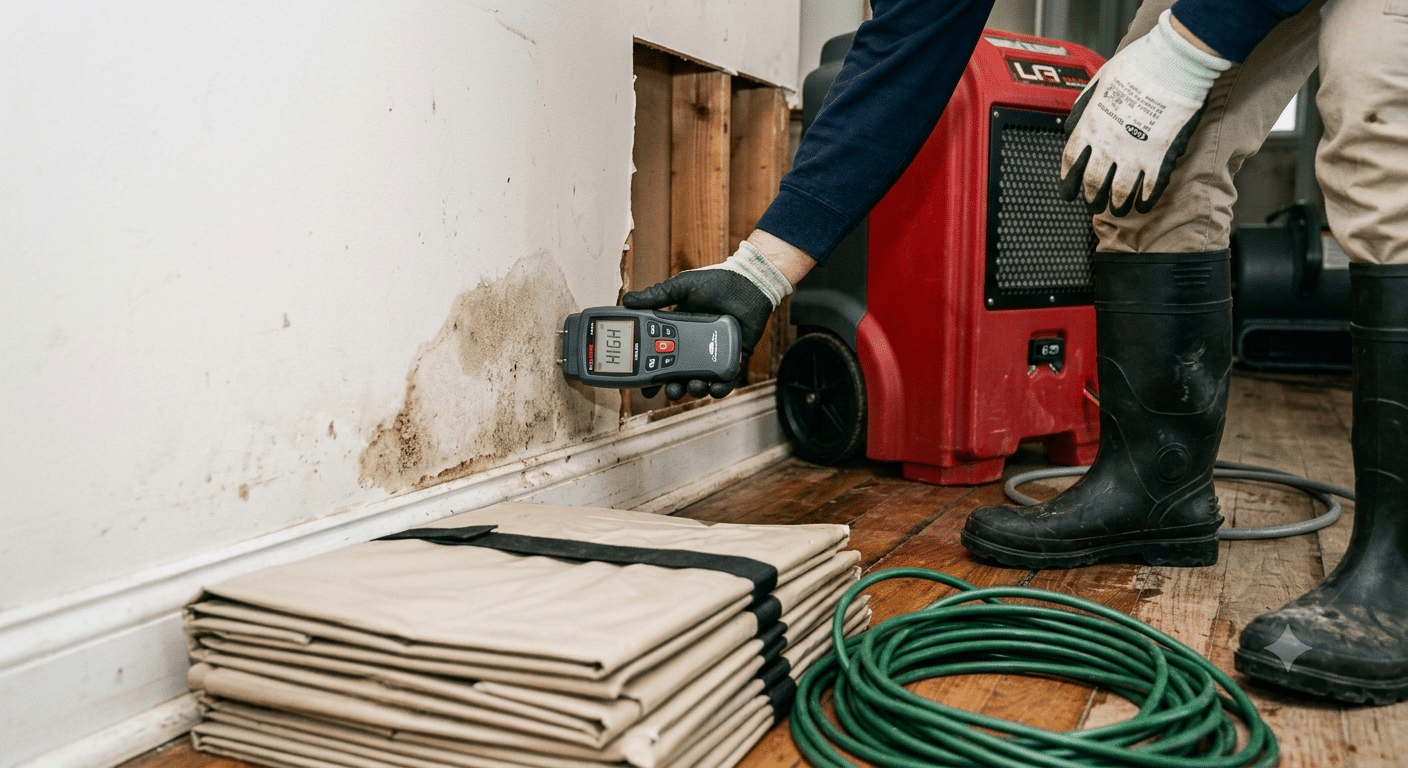
A common mistake is assuming extraction is finished once no more standing water is visible. Carpet padding can retain significant moisture even after the surface appears dry. Subfloor seams can trap water that won’t show up without probing. Professional technicians verify extraction with moisture readings at multiple points, not just a visual check, ensuring the drying phase that follows is working from an accurate starting point rather than fighting against pockets of water that were never actually removed.
Choosing a Provider Built for This Specific Step
Extraction quality varies significantly between providers depending on equipment capacity, technician training, and response infrastructure. Property owners comparing options should look specifically for a water removal company near me that maintains its own truck-mounted extraction equipment rather than relying solely on portable units, since portable equipment alone often isn’t sufficient for anything beyond a minor, contained loss. The extraction phase sets the foundation for everything that follows, and cutting corners here typically means paying for it later in extended drying time or secondary damage that wasn’t fully addressed the first time.
Questions Homeowners Ask
| Why does water category matter for extraction? | Clean, gray, and black water each carry different contamination risk. The category determines whether materials can be dried and salvaged or must be removed and disposed of due to safety concerns. |
| Is a shop vac enough for water cleanup? | For minor, contained spills, possibly. For anything beyond that, truck-mounted extraction equipment removes far more volume and reaches moisture trapped in padding, subfloor, and wall cavities that consumer equipment cannot access. |
| How is extraction confirmed complete? | Technicians take moisture readings at multiple points rather than relying on visual inspection alone, since materials like carpet padding can retain water even after the surface appears dry. |
| Does response time really change the outcome? | Yes. Extraction within the first few hours typically preserves more materials than extraction delayed by even a day, since water continues migrating deeper into flooring and framing the longer it sits. |
Related Posts