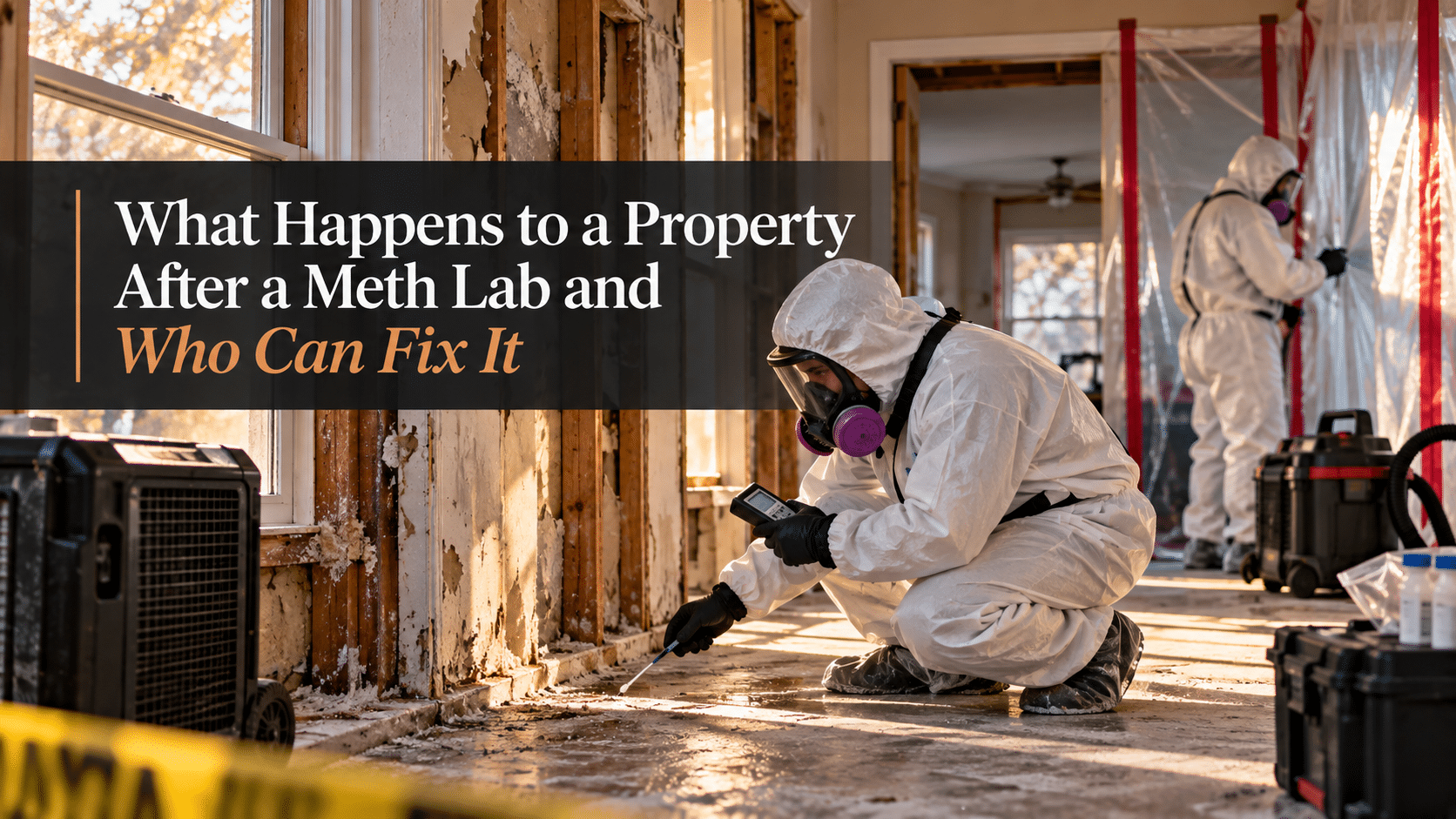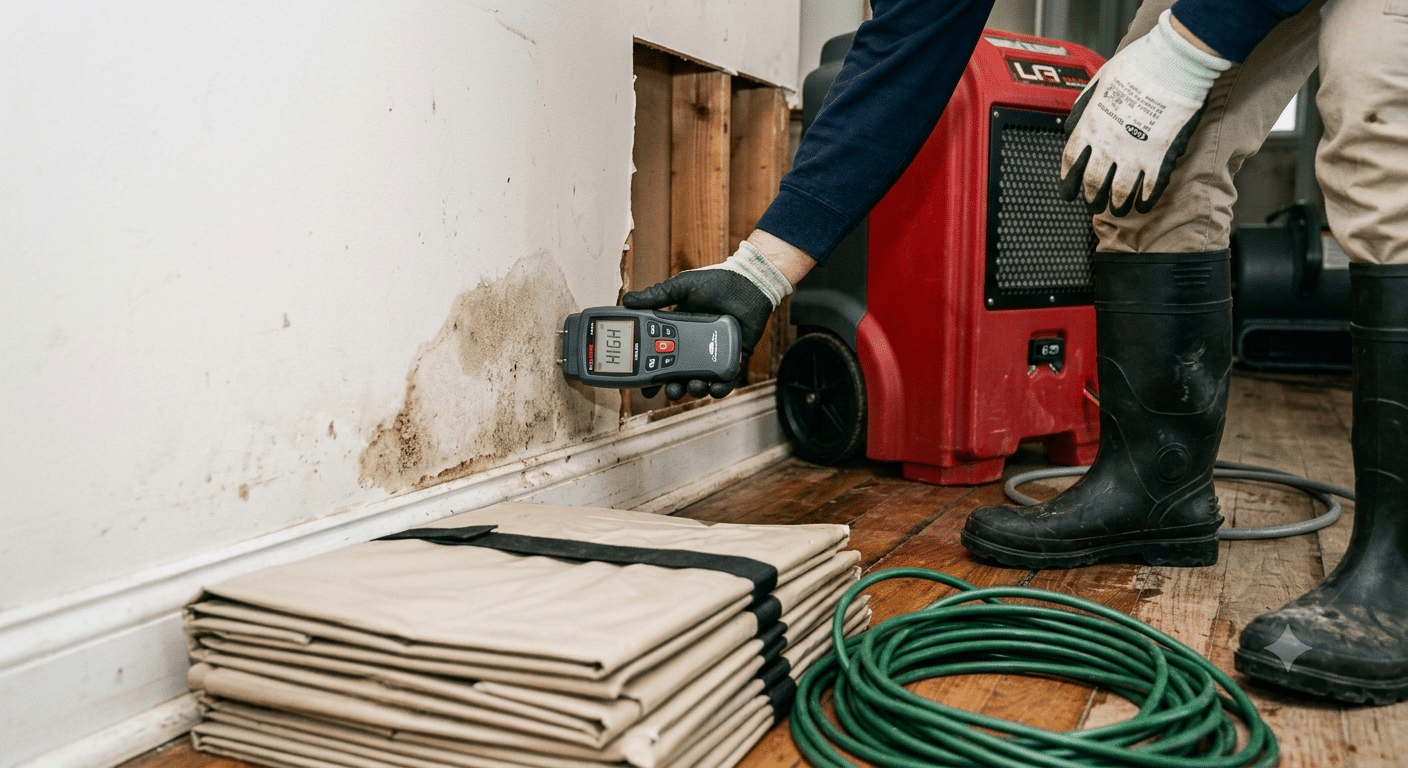
A property that was used as a methamphetamine laboratory is not simply dirty. It is…
Residential Water Damage Cleanup and the Science of Proper Drying
Drying Is a Process, Not a Single Step
Once standing water is gone, many homeowners assume the hard part is over. In reality, drying is its own complex process governed by psychrometry, the science of how air temperature, humidity, and airflow interact to pull moisture out of materials. Done correctly, structural drying restores materials to their normal moisture content without further damage. Done poorly, or stopped too early, it leaves behind conditions that allow mold to establish weeks after the visible cleanup appears finished.
How Residential Properties Differ From Commercial Drying Jobs
Residential water damage cleanup typically involves a narrower mix of materials than a commercial loss, but it comes with its own complications: finished living spaces, furniture and belongings that need protection or removal, multiple flooring types in close proximity, and family members who need to continue living in or near the affected area during the drying process. This requires a different approach than commercial drying, where spaces are often open and unoccupied during the restoration window. Equipment placement, noise considerations, and the pace of the project all need to account for the fact that people are still living in the home.
The Equipment Behind Effective Drying
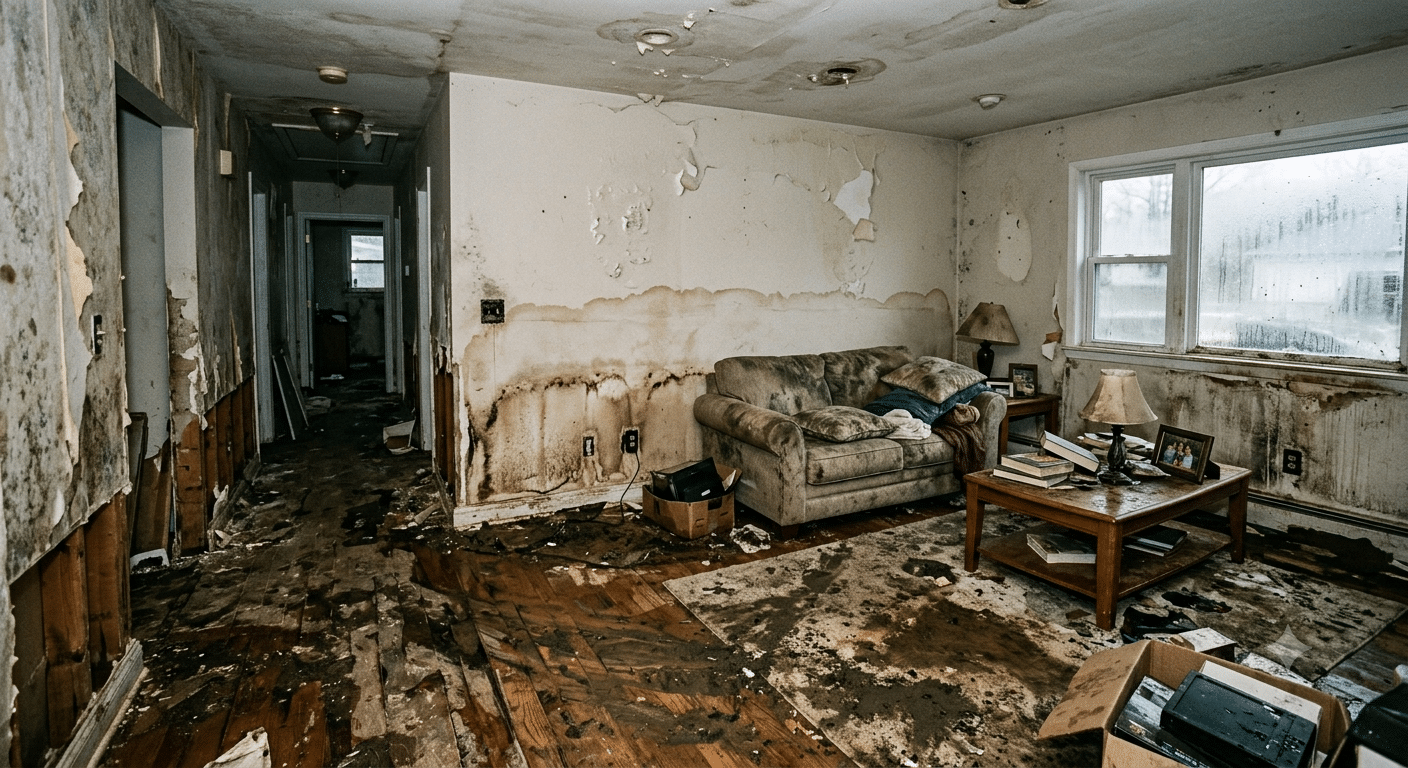
Industrial air movers create controlled airflow across wet surfaces, accelerating evaporation far beyond what natural air circulation could achieve. Commercial dehumidifiers then pull that evaporated moisture out of the air before it can resettle onto dry surfaces or migrate into unaffected areas. The two pieces of equipment work as a system, air movers evaporate moisture while dehumidifiers capture it, and removing either piece from the equation significantly slows the entire process. This is the foundation of water extraction and drying done to industry standard rather than a homeowner running a single box fan and hoping for the best.
Why Drying Time Varies So Much Between Jobs
A straightforward, contained loss with clean water might dry completely within three to five days. A loss involving dense materials like hardwood flooring, multiple wet layers, or contaminated water can take significantly longer, sometimes two weeks or more. Colorado’s low ambient humidity actually works in a homeowner’s favor here, since it creates a stronger gradient pulling moisture out of materials and into the air, where dehumidifiers can capture it. But this advantage only helps if the equipment is properly sized and positioned. Underpowered equipment in a large affected area will dry slowly regardless of the favorable climate.
How Technicians Know When Drying Is Actually Finished
Drying isn’t complete when materials feel dry to the touch, it’s complete when moisture content readings return to an established dry standard, typically benchmarked against unaffected materials elsewhere in the same structure. Technicians take daily readings throughout the drying process, comparing affected areas against this baseline and adjusting equipment placement as conditions change. Stopping equipment too early based on a surface-level assumption is one of the most common reasons restoration projects fail and require revisiting weeks later when hidden moisture finally causes a visible problem.
What This Means for Homeowners Managing the Process
Understanding the science behind drying helps homeowners ask better questions during the restoration process: what moisture readings are being tracked, what the dry standard target is, and how those numbers are trending day to day. A restoration provider that can answer these questions clearly, rather than offering vague reassurances, is generally one that’s actually following proper protocol rather than simply running equipment until a predetermined number of days have passed. This transparency matters because incomplete drying doesn’t always show consequences immediately, sometimes the real cost of cutting the process short doesn’t appear until mold or structural issues surface much later.
Questions Homeowners Ask
| How long does structural drying usually take? | A straightforward loss with clean water typically dries within three to five days. Dense materials, multiple wet layers, or contaminated water can extend this to two weeks or more depending on conditions. |
| Does Colorado’s dry climate help drying? | Yes, low ambient humidity creates a stronger gradient that helps pull moisture out of materials. However, this advantage only matters if drying equipment is properly sized and positioned for the affected area. |
| How do technicians know drying is finished? | Moisture content readings are compared against a dry standard benchmarked from unaffected materials in the same structure, not a surface-level touch test, ensuring drying is verified rather than assumed. |
| Can I stay home during residential drying? | In most cases yes. Residential drying accounts for occupied living spaces, adjusting equipment placement and project pace around the fact that families are typically living in or near the home during restoration. |
Related Posts