A Connection Most Homeowners Don't Think About Colorado's Front Range sees some of the most…
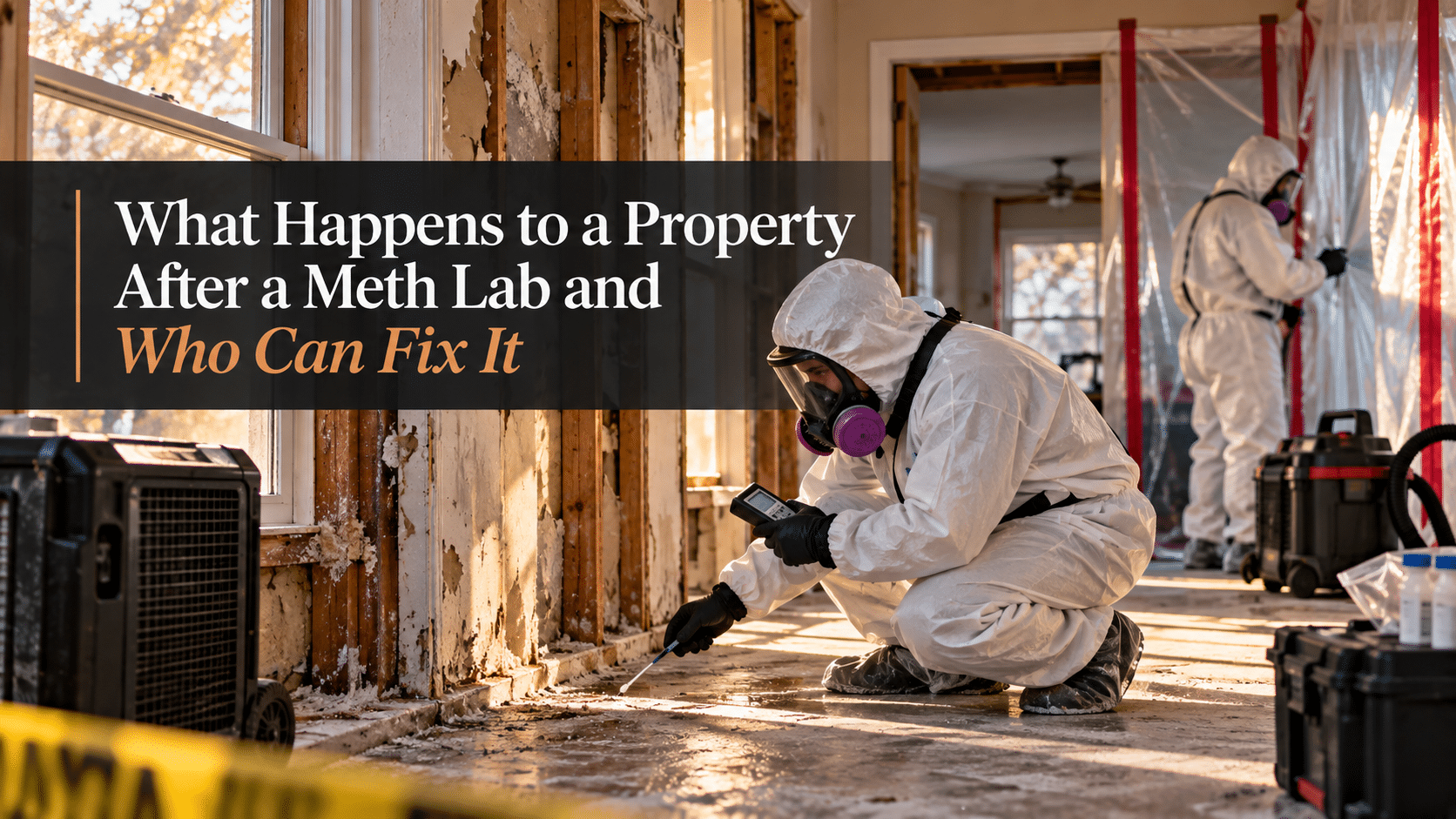
What Happens to a Property After a Meth Lab and Who Can Fix It
A property that was used as a methamphetamine laboratory is not simply dirty. It is chemically contaminated with toxic compounds that penetrate porous building materials and cannot be cleaned with standard household or commercial cleaning methods. In Colorado, methamphetamine lab contamination is a regulated condition that requires licensed remediation contractors, documentation of the cleanup, and clearance testing by a certified industrial hygienist before the property can legally be occupied. Understanding what this means for property owners, buyers, and landlords clarifies what the path to a usable property actually involves.
What Meth Lab Contamination Does to a Property
The chemicals used in methamphetamine production, including precursor solvents, reaction chemicals, and the methamphetamine itself, deposit on every surface in the production area and beyond. These chemicals vaporize and migrate throughout the structure, penetrating drywall, ceiling tiles, carpet, HVAC ductwork, and wood framing. The contamination is not visible. A property that was used as a meth lab can look completely clean and still have chemical contamination at levels that exceed Colorado’s health-based standards.
Exposure to residual meth lab chemicals produces health effects including respiratory irritation, headaches, nausea, skin irritation, and in cases of prolonged exposure, more serious neurological effects. Children are particularly vulnerable to low-level exposure that adults might tolerate. Property Craft’s meth lab cleanup certification (ML-F168) qualifies the company for the licensed remediation work that Colorado law requires before a formerly contaminated property can be re-occupied.
Colorado’s Regulatory Framework for Meth Lab Properties
Colorado law requires that property owners who discover or suspect meth lab contamination notify the local health department. The property cannot be re-occupied until remediation is completed by a licensed contractor and clearance testing by a certified industrial hygienist confirms that chemical levels have been reduced to below Colorado’s health-based standards. Selling or renting a property with known meth contamination without disclosure and remediation creates significant legal liability for the property owner.
The clearance standard in Colorado is based on methamphetamine surface concentration measured in micrograms per 100 square centimeters of surface area. The standard applies to all surfaces in the affected area including walls, ceilings, floors, HVAC surfaces, and any fixtures that remained in the property. Clearance testing samples multiple surfaces per room and laboratory analysis confirms compliance before the property is released for occupancy.
What the Remediation Process Involves
- Initial testing by a certified industrial hygienist to determine the extent and concentration of contamination
- Removal of all porous materials that absorbed contamination, including carpet, pad, drywall, and insulation in affected areas
- Chemical washing of non-porous surfaces including sealed concrete, tile, and metal fixtures using approved cleaning agents
- HVAC system cleaning and decontamination or replacement if the system is compromised
- Encapsulation of remaining structural materials with approved barrier coatings where material removal is not required
- Post-remediation clearance testing by a certified industrial hygienist to confirm compliance with state standards
- Documentation package including the initial testing results, remediation scope, and clearance test confirmation for the property file
Property Buyers and Meth Lab Disclosure
Colorado law requires sellers to disclose known meth lab contamination to potential buyers. Buyers of properties in rural Colorado communities, where unauthorized meth production in residential settings has historically been more prevalent, should include a meth contamination inspection contingency in purchase agreements for properties with any indication of prior drug-related activity.
A property that has been professionally remediated with documented clearance testing and a complete remediation file is a safe property to purchase. The documentation confirms that the contamination was addressed to regulatory standards and that the clearance testing confirmed compliance. Property Craft provides this documentation package as part of every meth lab cleanup engagement, giving property owners, buyers, and their lenders the evidence record the transaction requires.
What Meth Lab Properties Look Like
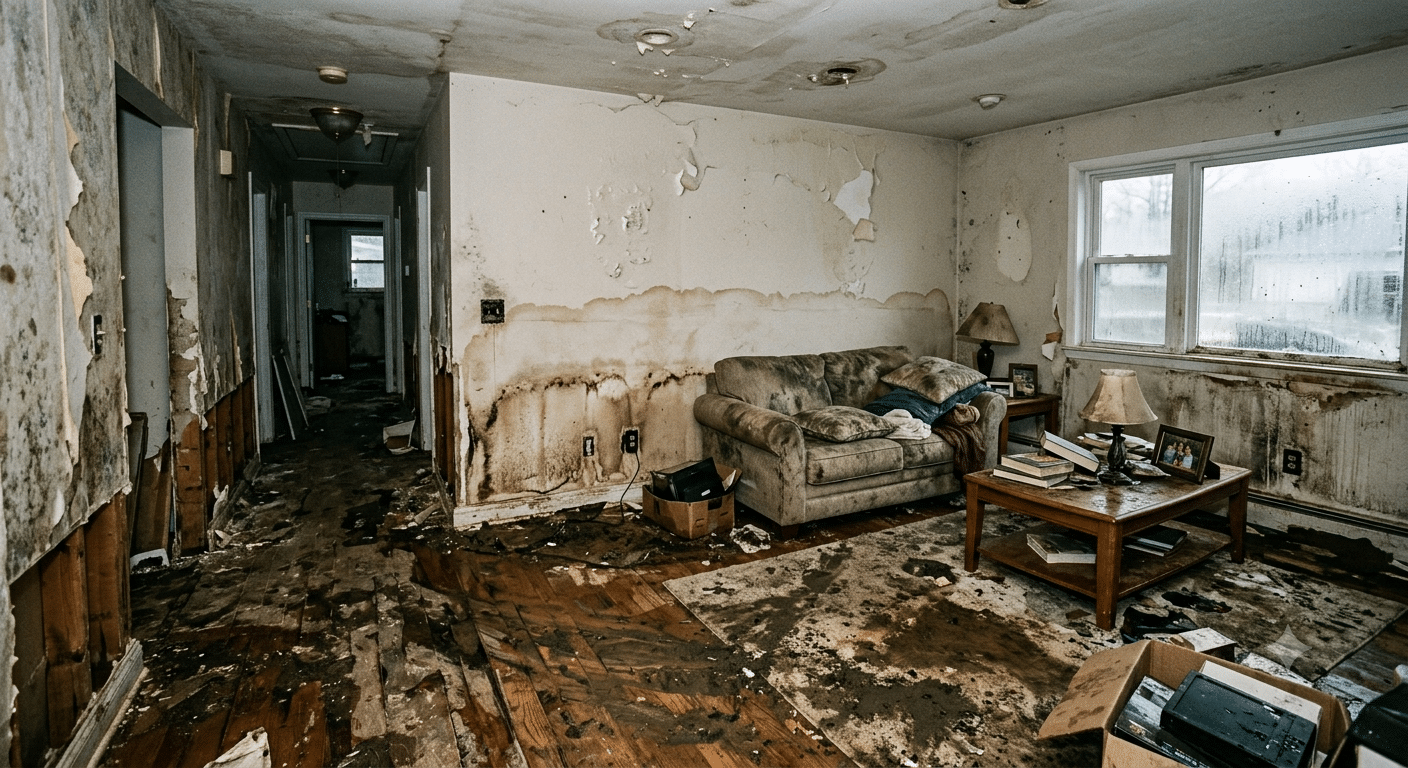
The physical indicators of former meth production include chemical staining on walls and floors, improvised ventilation including holes in exterior walls or atypical window modifications, residue from chemical containers on surfaces, and in some cases structural damage from production activities or from law enforcement search and seizure. However, none of these visible indicators is required for contamination to be present. A property that was used for meth production and then thoroughly cleaned by the occupants before discovery can still have chemical contamination at levels requiring professional remediation.
Frequently Asked Questions
Q: How do I know if a Colorado property was used as a meth lab?
A: Colorado maintains a list of properties where meth lab activity has been reported to law enforcement or health departments, accessible through the Colorado Department of Public Health and Environment. Physical indicators may include chemical staining, atypical ventilation modifications, or residue consistent with chemical production. However, the only reliable method to confirm presence or absence of contamination is laboratory testing of surface samples by a certified industrial hygienist.
Q: Is meth lab contamination covered by homeowners insurance?
A: Standard homeowner policies typically do not cover meth lab contamination remediation because the contamination resulted from illegal activity on the premises. Some policies with specific endorsements may provide limited coverage. The remediation cost is typically borne by the property owner. If the contamination was discovered following a tenant’s activities, there may be a legal claim against the tenant, but the immediate remediation cost falls to the property owner regardless.
Q: How much does meth lab cleanup cost in Colorado?
A: Cost depends on the extent of contamination, the size of the affected area, the level of material removal required, and the number of clearance testing rounds needed to achieve compliance. A contained remediation in a single room may cost several thousand dollars. A whole-structure remediation with extensive material removal and multiple testing rounds may cost significantly more. An initial industrial hygienist assessment provides a contamination map that supports accurate cost estimation before remediation begins.
Q: Can a meth-contaminated property be sold without remediation in Colorado?
A: No. Colorado law requires disclosure of known meth contamination and prohibits occupancy of a contaminated property. Selling a property with known contamination without disclosure creates legal liability for the seller. Lenders will not approve financing for properties with known contamination without documented remediation and clearance. Property owners who discover contamination should initiate the remediation process before listing the property rather than attempting to transfer the problem to a buyer.
Meth lab contamination at a Colorado property? Property Craft holds Colorado meth remediation certification ML-F168 and provides licensed cleanup with industrial hygienist clearance testing. Serving Colorado Springs, Pueblo, Pueblo West, Loveland, Greeley, and Longmont. Call now.
Related Posts