We hear it a lot from homeowners along the Front Range: “It’s Colorado, it’ll dry…
What Hailstorms Along the Front Range Do to Homes Beyond the Roof
The Colorado Front Range from Pueblo through Colorado Springs, Greeley, and into Longmont and Boulder sits in one of the most active hail corridors in North America. Large hail events that produce stones above one inch in diameter occur regularly in these communities during the June through August severe weather season. The roof gets most of the attention after a hailstorm, and rightly so, but significant hail events cause damage to multiple building systems simultaneously that a roof inspection alone does not reveal.
What Large Hail Does Beyond the Roof
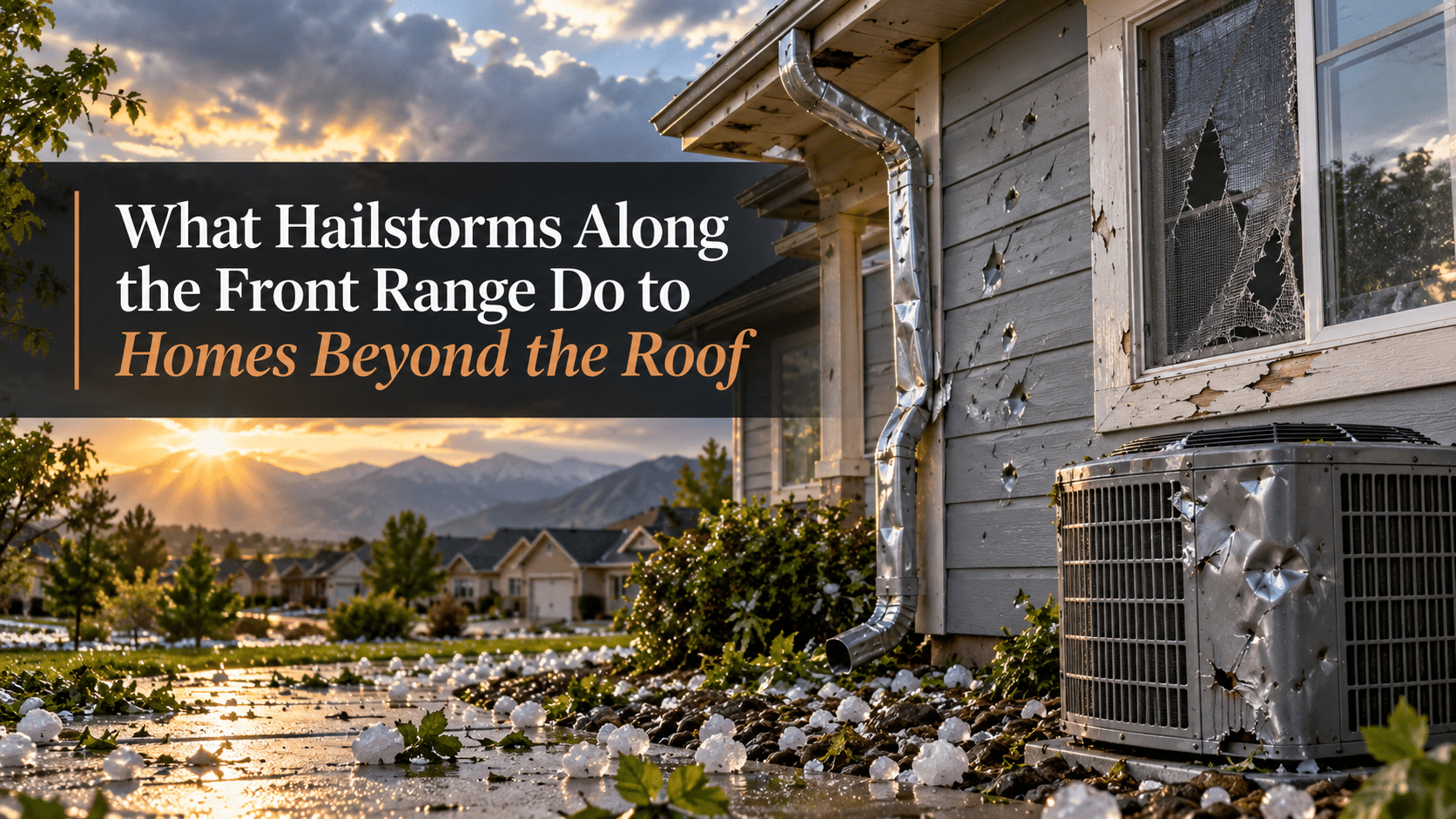
Gutters and downspouts sustain impact damage from large hail that restricts drainage and in some cases detaches gutter sections from the fascia. Siding on homes with vinyl or softer material cladding shows impact dents and fractures that compromise the weather seal. Window screens are shredded. Painted wood surfaces including fascia, trim, and decking show peeling and crazing from impact damage that accelerates UV degradation.
Air conditioning condenser units that were exposed to large hail sustain fin damage that reduces cooling efficiency. HVAC systems with damaged condenser fins operate at reduced capacity and higher energy cost until the fins are straightened or the unit is replaced. Property Craft’s storm damage assessment covers all of these components as part of the post-hailstorm evaluation, not just the roof surface.
Roof Damage: What Is Visible and What Is Not
Large hail produces impact marks on asphalt shingles that include circular areas of granule displacement where the hail stone struck the shingle face. These impact marks are visible on the shingle surface during a roof inspection but are not visible from the ground. The granule displacement reduces UV protection at each impact point, causing accelerated weathering and shingle life reduction that progresses to active leaking over months to a year.
Metal roofing and standing seam panels show surface dimpling from hail impact. The dimpling is aesthetic damage that does not immediately compromise weathertightness but does damage protective coatings, accelerating corrosion in Colorado’s seasonal moisture cycles.
Soft metal components including ridge vents, pipe flashings, and valley metal show clear impact marks that are visible during inspection and are among the most reliable documentation of hail exposure on a given property. These impacts, combined with shingle granule displacement and siding damage, constitute the evidence record for the storm damage insurance claim.
The Insurance Claim Timeline in Colorado
Colorado homeowner policies provide coverage for hail damage to the roof, siding, and other affected systems subject to the deductible and any specified roof coverage limitations. A trend in Colorado insurance market since 2020 has been the introduction of Actual Cash Value roof coverage limitations that depreciate the roof value by age rather than paying replacement cost. Homeowners with ACV roof endorsements receive significantly less in roof damage claims than those with Replacement Cost coverage.
The inspection and filing should happen within the policy’s filing window, which varies by carrier but is typically one year from the date of the storm. Hail damage that is not assessed and filed within the filing window is not recoverable regardless of the damage extent. Property owners in hail-prone Front Range communities who skip the inspection after a significant storm event often discover the damage through leaks months after filing deadlines have passed.
Wildfire Smoke and Post-Fire Storm Damage
Colorado’s fire-prone landscape creates a secondary storm damage pattern that affects properties adjacent to recent burn areas. Burn scars destabilize hillsides, and the rainstorms that follow fire seasons produce debris flows and erosion that damage properties below affected slopes. Interior water intrusion from debris flows carries soil and ash contamination that makes the resulting water damage a category two or three event rather than a clean water restoration. Property Craft’s fire damage and water damage capabilities address the combined fire and flood scenario that Colorado’s post-wildfire landscape creates for properties in areas like Colorado Springs’ western neighborhoods and communities along the Front Range foothills.
Frequently Asked Questions
Q: How do I know if my Colorado home has hail damage after a storm?
A: A professional roof inspection is the only reliable way to assess hail damage on asphalt shingles, where the impact marks on the shingle face are not visible from the ground. Additional indicators that can be checked without a roof inspection include damage to window screens, impact dents on aluminum siding or metal components, and visible impact marks on gutters and downspouts. HVAC condenser fin damage can be checked at ground level. If any of these ground-level indicators are present after a significant hail event, a professional roof inspection is warranted.
Q: What is the difference between ACV and replacement cost roof coverage in Colorado?
A: Replacement cost coverage pays the cost to replace the damaged roof with a new roof of like kind and quality minus the deductible. Actual Cash Value coverage depreciated the roof’s value by age and condition before paying the claim, which means older roofs receive significantly less than the replacement cost. Many Colorado insurers introduced ACV endorsements after major hail events. Check the current policy for any ACV or cosmetic damage exclusions that affect roof claim payments.
Q: How long do I have to file a hail damage insurance claim in Colorado?
A: Most Colorado homeowner policies provide a one year filing window from the date of the storm for hail damage claims. Some policies allow longer filing windows. Missing the filing deadline forfeits coverage for the damage regardless of its extent. Professional inspection and claim filing should happen within weeks of a significant hail event, not months later when active leaking provides the first indication that the damage was real.
Q: Does hail damage affect the structural integrity of a Colorado home?
A: Hail damage to the roof, siding, and exterior components does not typically create immediate structural failure. The progression from hail impact to structural concern follows a timeline: unprotected shingle surfaces weather faster at impact points, leading to leaks over months to a year. The leaked water then creates the structural concern through the secondary damage it causes to roof sheathing, attic framing, and interior assemblies. Addressing the roof damage prevents the structural cascade.
Hail storm damage to your Colorado property? Property Craft provides professional storm damage assessment and restoration across Colorado Springs, Pueblo, Pueblo West, Loveland, Greeley, and Longmont. Call now.
Related Posts