
The Colorado Front Range from Pueblo through Colorado Springs, Greeley, and into Longmont and Boulder…
Why Colorado’s Dry Air Won’t Dry Out Water Damage on Its Own
We hear it a lot from homeowners along the Front Range: “It’s Colorado, it’ll dry out on its own.” It makes sense. Our air is some of the driest in the country, and a wet towel hung outside can dry in an hour. So when a pipe leaks or a dishwasher overflows, it’s tempting to open the windows, run a fan, and wait.
The problem is that water damage doesn’t live in the air. It lives inside walls, under floors, and in the materials you can’t see. Here’s why dry air isn’t enough, how hidden water gets found, and what proper drying actually involves.
Where the Water Really Goes
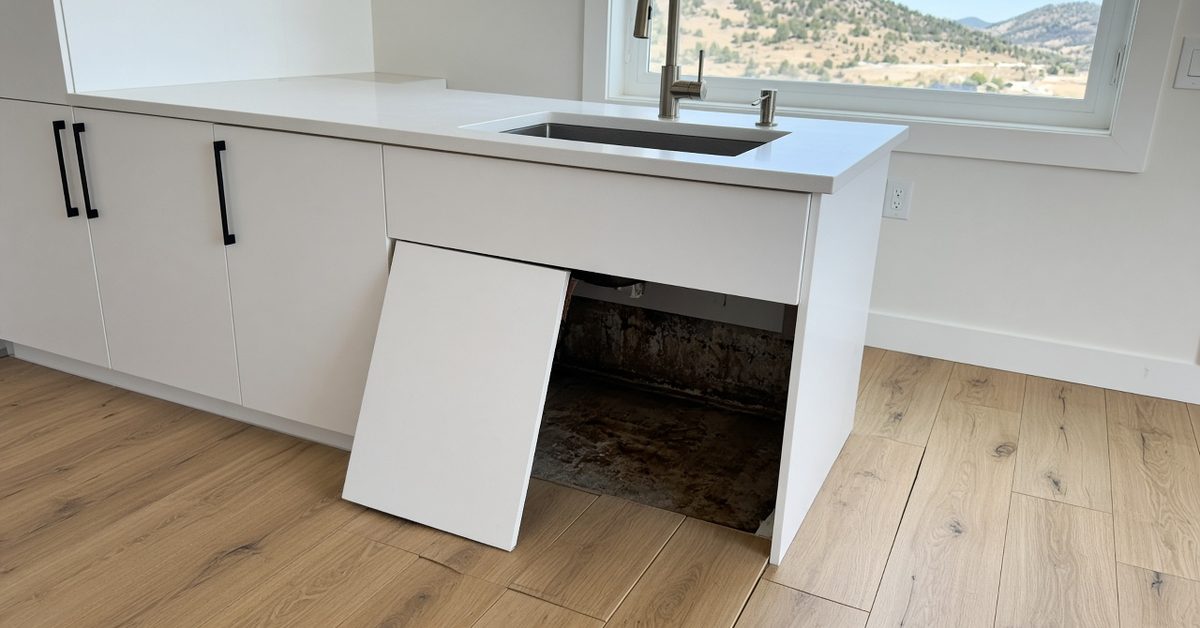
When water spills across a floor, it doesn’t just sit on the surface. It soaks into carpet pad, slips under baseboards, and wicks up the bottom of drywall. It seeps under laminate and hardwood, into the subfloor, and along the bottom plate of the wall framing. If the leak came from above, it collects on top of ceiling drywall and runs down inside wall cavities.
Those spaces are enclosed. Air barely moves inside a wall or under a floor, no matter how dry the air in the room is. A wall can feel dry to the touch while the drywall behind the paint and the insulation behind that are still wet.
Why “It’ll Dry on Its Own” Backfires
When wet materials stay wet for days, problems follow:
- Drywall softens, stains, and loses its bond to the framing.
- Hardwood floors cup and crown as the boards swell.
- Laminate and engineered flooring separates at the seams.
- Subfloors swell and can delaminate.
- Cabinet bases, often made of particleboard, swell and fall apart.
- Lingering odor develops as materials stay damp.
By the time these signs show up, the repair is usually much bigger than it would have been with proper drying in the first few days.
How Hidden Water Gets Found
You can’t dry what you can’t find. Our thermal inspection and imaging uses infrared cameras to show temperature differences that point to wet areas behind walls, under floors, and in ceilings. Moisture meters then confirm how wet each material actually is.
That process builds a moisture map of the affected area. The map shows exactly which walls need attention, how far water traveled under flooring, and where drying equipment should go. It also becomes part of the documentation for your insurance claim.
What Proper Drying Looks Like
Professional drying is about controlling three things: airflow, humidity, and temperature.
Airflow. Air movers are placed to push air across wet surfaces, and small holes or removed sections of drywall let air reach inside wall cavities.
Humidity. As water evaporates from materials, it goes into the air in the room. Even in Colorado, a closed room full of evaporating water gets humid fast, and that slows drying down. Commercial dehumidification equipment pulls that moisture out of the air continuously so materials keep releasing water.
Temperature. Warmer air holds more moisture and speeds evaporation, so temperature is managed as part of the drying plan.
Readings are taken every day until every material is back to its normal moisture level. Only then do repairs begin.
What You Can Do Right Away
- Stop the source of the water.
- Turn off power to wet areas if water is near outlets or fixtures.
- Remove standing water with towels or a wet-vac.
- Pull up area rugs and move furniture off wet floors.
- Take photos of everything.
- Call a restoration company, even if the damage looks small.
Frequently Asked Questions
Does Colorado’s low humidity help with drying?
It helps a little, especially with surfaces you can see. But water trapped inside walls, under floors, and in insulation doesn’t have access to that dry air. Enclosed spaces need targeted airflow and dehumidification to dry properly.
How can I tell if my walls are wet inside?
Often you can’t by touch. Signs include peeling or bubbling paint, soft drywall near the floor, swollen baseboards, or stains that slowly spread. Thermal imaging and moisture meters give a clear answer.
How long does professional drying take?
Most water losses dry in three to five days once equipment is running. Larger losses, hardwood floors, or water that sat for a while can take longer. Daily readings show exactly when each area is dry.
Is it okay to just run fans?
Fans move air across surfaces, but they don’t remove moisture from the room or reach inside walls. Without dehumidification and proper setup, fans can leave hidden water behind while the room looks dry.
Will my insurance pay for professional drying?
If the water loss itself is covered, emergency mitigation like extraction and drying is usually covered too. Insurers expect reasonable steps to prevent further damage, and professional drying is part of that.
Serving the Front Range
We dry out homes and businesses across the region, from Longmont and Boulder to Colorado Springs. If you’ve had a leak, call Property Craft at (719) 782-8629. We’ll find the water you can’t see and make sure it’s truly dry.
Related Posts