We hear it a lot from homeowners along the Front Range: “It’s Colorado, it’ll dry…

How Do You Know If Your Roof Is Damaged After a Storm?
The most reliable way to know if your roof was damaged in a storm is to have a qualified professional assess it from the roof surface and from the attic. From the ground, you can identify obvious missing shingles, visible structural damage, and large debris impacts. What you cannot see from the ground is hail bruising beneath the shingle surface, broken adhesive seals, compromised flashing, and early water intrusion in the attic, which is where the most consequential damage often lives.
The Front Range sees significant hail events regularly, and the damage that leads to the most expensive claims is frequently the damage that looked minor or invisible from the driveway.
What Hail Damage Actually Looks Like on a Roof
Hail impact on asphalt shingles creates a specific pattern: circular areas of granule loss where the impact displaced the protective surface layer, exposing the darker asphalt mat beneath. On older shingles, this displacement is more pronounced because the granules were already less firmly bonded. On newer shingles, the impact may leave only slight bruising of the mat with minimal visible granule loss.
The bruising of the mat is the critical damage. That area has lost its UV protection and weather resistance. The shingle continues to function temporarily, but its lifespan has been cut significantly. Leaks that appear months after a hailstorm almost always trace back to impact damage that was never assessed and repaired.
After any significant hail event across the Colorado Springs area, getting a qualified assessment done while the impact marks are still clearly identifiable is the most important step a homeowner can take. Hail damage roof assessment in Colorado Springs documents the specific impact patterns, granule displacement, and mat bruising in a format that the insurance adjuster needs to process the claim accurately.
What Wind Damage Looks Like
Wind damage is more variable than hail damage and often less visible. High winds create uplift pressure that lifts shingles without removing them. When the wind drops, the shingles settle back into position. From the ground, the roof looks intact. The adhesive seal that bonds those shingles together is broken.
A shingle with a broken seal is a shingle waiting to fail. The next significant wind event will lift it further. Rain driven under the lifted shingle during a storm finds its way under the shingle layer and into the roof assembly. The damage appears as an interior leak weeks or months after the wind event, with no obvious connection to any specific storm.
Homeowners in Loveland and the Boulder area who experienced high winds and noticed no obvious exterior damage should still have the shingle seals checked before the next weather system. Wind damage and storm restoration in Loveland includes checking seal integrity across the full roof surface, not just inspecting for visible displacement or missing shingles.
Can Storm Damage Cause Roof Leaks Months Later?
Yes, and this is more common than most homeowners expect. Hail impact that bruises the shingle mat without creating an immediate leak creates a weakened area that fails under the next significant rain or freeze-thaw cycle. Wind that breaks shingle seals creates a vulnerability that does not produce a leak until wind-driven rain finds the gap.
This delayed failure pattern is why getting an assessment immediately after a storm event is more valuable than waiting to see if a leak develops. By the time a leak appears, the original storm damage has often been compounded by additional weather exposure, and the connection to the original storm becomes harder to establish for insurance purposes.
Properties in Pueblo and Colorado Springs that experienced a significant storm event and did not get a professional assessment are carrying unknown damage that may manifest as a leak in the next weather cycle. Storm damage restoration and roof assessment in Pueblo documents the original storm damage before additional weather exposure changes what the damage looks like.
Should You Get Your Roof Inspected After Every Hailstorm?
After any storm that produced hail larger than an inch in diameter, yes. That size threshold is where impact damage to asphalt shingles becomes consistent and significant. Smaller hail can still cause damage, particularly to older roofs with less firmly bonded granules, but the damage is less predictable.
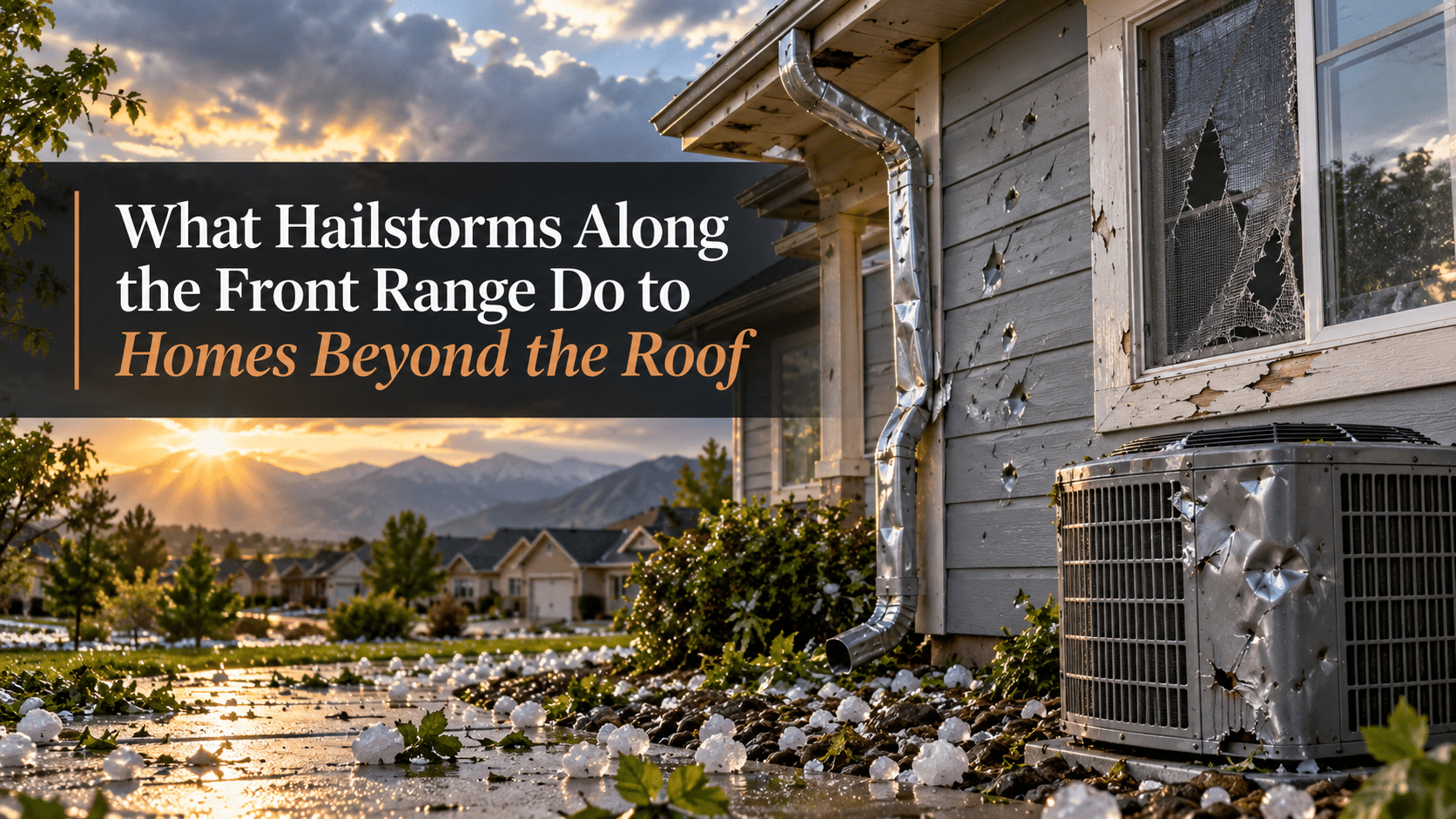
If the storm produced hail large enough to dent gutters, damage vehicle hoods, or leave impact marks on wood fences or decks, the roof almost certainly took impact damage as well. These are the events that warrant an inspection before the next rain rather than a wait-and-see approach.
What the Attic Tells You That the Roof Surface Does Not
The attic is the most informative place to assess storm damage after a significant weather event. Water staining on the underside of the roof sheathing shows exactly where water entered and how far it traveled. Wet or compressed insulation marks the path of water intrusion. Daylight visible through the roof deck confirms a breach.
Property Craft includes attic inspection as a standard part of every storm damage assessment across the service area. Homeowners in Boulder and Longmont who have had a significant storm event and want to know the full picture before deciding whether to file a claim benefit from a full storm damage assessment in Boulder and Longmont that covers both the exterior surface and the attic, giving a complete and accurate scope of what the storm actually did to the structure.
Frequently Asked Questions
Q: How do you know if your roof is damaged after a storm?
A: A professional assessment from the roof surface and from the attic is the only reliable method. From the ground, you can identify obvious missing shingles and visible structural damage. Hail bruising, broken adhesive seals, compromised flashing, and early water intrusion in the attic require a qualified inspector with access to the roof and attic to identify.
Q: What does hail damage look like on a roof?
A: Hail impact creates circular areas of granule loss that expose the darker asphalt mat beneath. On newer shingles, the impact may leave primarily mat bruising with minimal visible granule displacement. In both cases, the affected area has lost UV protection and weather resistance, making it vulnerable to accelerated deterioration and eventual leaking.
Q: Can storm damage cause roof leaks months later?
A: Yes. Hail bruising weakens the shingle mat and creates a failure point that develops into a leak under subsequent weather exposure. Wind that breaks adhesive seals creates a vulnerability that does not produce a leak until wind-driven rain finds the gap. Delayed leaks after storms are common and usually trace back to storm damage that was never assessed and repaired.
Q: Should I get my roof inspected after a hailstorm?
A: After any storm producing hail larger than an inch in diameter, yes. That size threshold produces consistent and significant impact damage to asphalt shingles. Storms producing hail large enough to dent gutters or leave marks on wood surfaces almost certainly damaged the roof as well. An assessment done promptly after the event documents the damage before additional weather exposure changes what it looks like.
Storm came through your area? Call Property Craft before your next rain. We assess the full structure from roof surface through attic and prepare your insurance documentation correctly.
Related Posts