A property that was used as a methamphetamine laboratory is not simply dirty. It is…
Why a Small Leak Turns Into a Major Restoration Project
The Gap Between Discovery and Damage
Most water damage doesn’t announce itself with a dramatic flood. It starts small, a slow drip under a sink, a hairline crack in a supply line, condensation building behind a washing machine. The danger isn’t the water itself, it’s the gap between when the leak begins and when someone actually notices it. During that gap, which can stretch from hours to weeks depending on the leak’s location, moisture is steadily working its way into materials that were never built to handle sustained exposure. By the time discoloration or a musty smell finally gets someone’s attention, the damage has often already progressed well past what a quick repair can fix.
How Moisture Spreads Before Anyone Notices
Water follows the path of least resistance, which rarely means staying contained to one spot. It seeps along subfloor seams, climbs baseboards through capillary action, and settles into wall cavities where airflow is minimal and drying happens slowly, if at all. In a dry Colorado climate, surface moisture can evaporate quickly, which sometimes creates a false sense of security. What looks dry on top can still be saturated several layers down, particularly in flooring assemblies, drywall, and the wood framing behind it. This is exactly why a homeowner’s first instinct, mopping up visible water and assuming the problem is solved, often leaves the real issue untouched.
The Window for Simple Intervention Closes Fast
In the first several hours after water intrusion, intervention is usually straightforward: extract what’s standing, set up drying equipment, and monitor moisture levels until materials return to a normal range. Once that window closes, typically within a day or two of sustained moisture, the situation changes. Drywall begins losing structural integrity. Wood subfloor starts to swell and delaminate. The conditions become favorable for microbial growth, particularly in a region where indoor humidity from a leak can sit far above the surrounding dry air, creating a localized pocket where mold has everything it needs. What would have been a same-day fix becomes a multi-week project involving demolition, remediation, and reconstruction.
Why Property Owners Often Underestimate the Scope
It’s natural to judge a leak by what’s visible. A small wet spot on the ceiling looks manageable. But that spot is usually just the place where moisture finally broke through a painted surface, not the actual boundary of the damage. Insulation above that ceiling may already be saturated and losing its effectiveness, and the framing supporting that section may be absorbing moisture from multiple directions. This is the moment most homeowners begin searching for water damage restoration near me, hoping a quick local response can still salvage the situation before it spreads further into adjoining rooms.
What a Proper Assessment Actually Involves
A thorough water damage assessment goes beyond what’s visible to the naked eye. Moisture meters check material saturation levels at multiple depths. Thermal imaging identifies temperature differentials that indicate hidden moisture inside walls and under flooring. This data determines exactly which materials can be dried in place and which need to be removed entirely. Skipping this step, or relying on a surface-level inspection alone, is how secondary damage gets missed until it resurfaces weeks later as a mold problem or a structural issue that costs significantly more to address than the original leak ever would have.
Acting Before the Window Closes
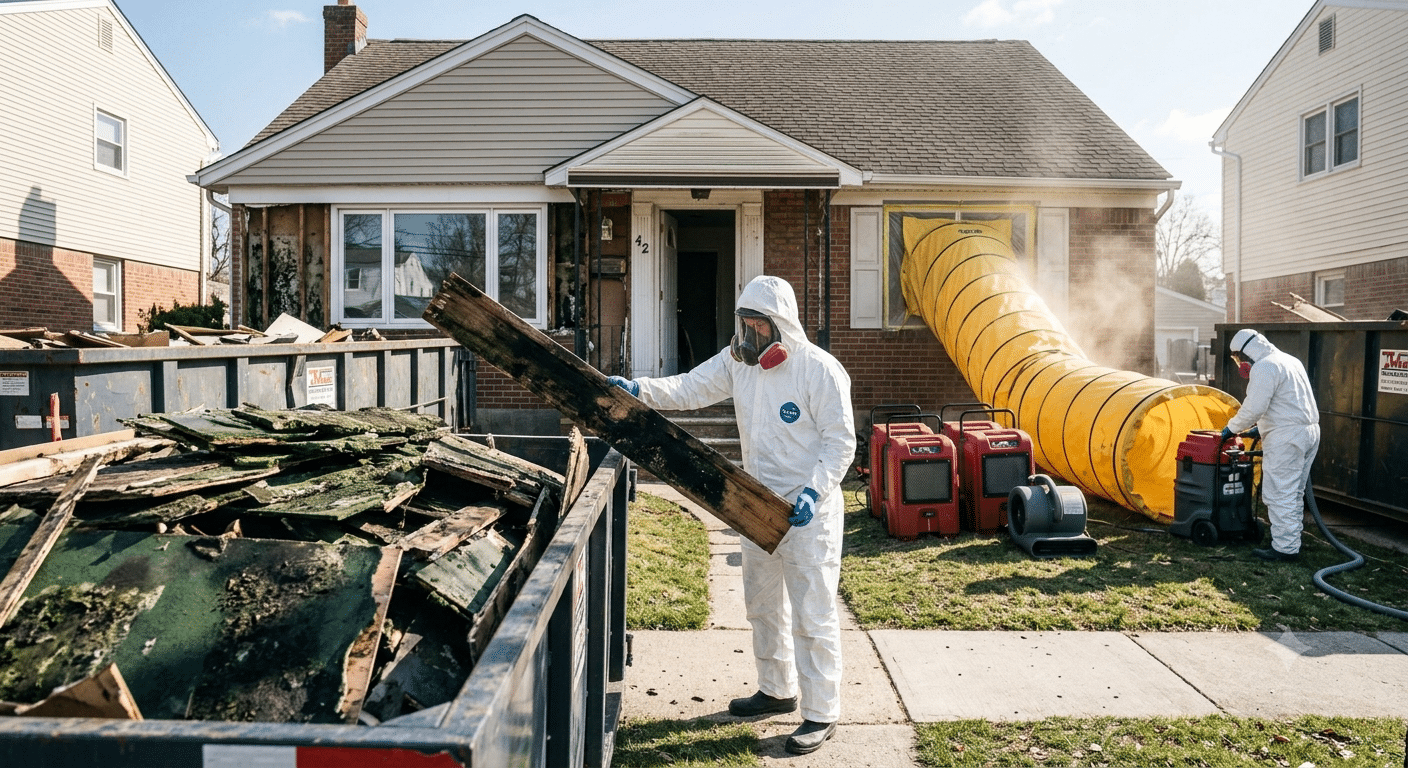
The single biggest factor in keeping a leak from becoming a major project is response time. Property owners who treat any water intrusion as time-sensitive, rather than something to deal with over the weekend, consistently see smaller restoration scopes and lower total costs. This is precisely the situation that calls for emergency water damage repair rather than a scheduled appointment days out, since every additional hour of standing moisture expands the area that ultimately needs treatment. For ongoing or recurring moisture issues, particularly in basements or crawl spaces prone to seasonal groundwater shifts, working with a provider that offers comprehensive water mitigation services ensures the underlying cause gets addressed, not just the immediate symptom.
Questions Homeowners Ask
| How long before a small leak becomes serious? | Materials can begin losing structural integrity within 24 to 48 hours of sustained moisture exposure. The window for simple drying intervention is narrow, which is why fast response matters more than the leak’s apparent size. |
| Can dry air mask a real moisture problem? | Yes. Surface moisture can evaporate quickly in a dry climate while deeper layers of flooring, drywall, or framing remain saturated. Visual inspection alone often misses this hidden moisture. |
| What tools confirm hidden moisture? | Moisture meters and thermal imaging cameras identify saturation and temperature differentials behind walls and under flooring, allowing technicians to map the true extent of damage before drying begins. |
| Why does response speed matter so much? | Faster response limits how far moisture travels before extraction and drying begin, which directly reduces the volume of material requiring removal and the overall scope and cost of restoration. |
Related Posts