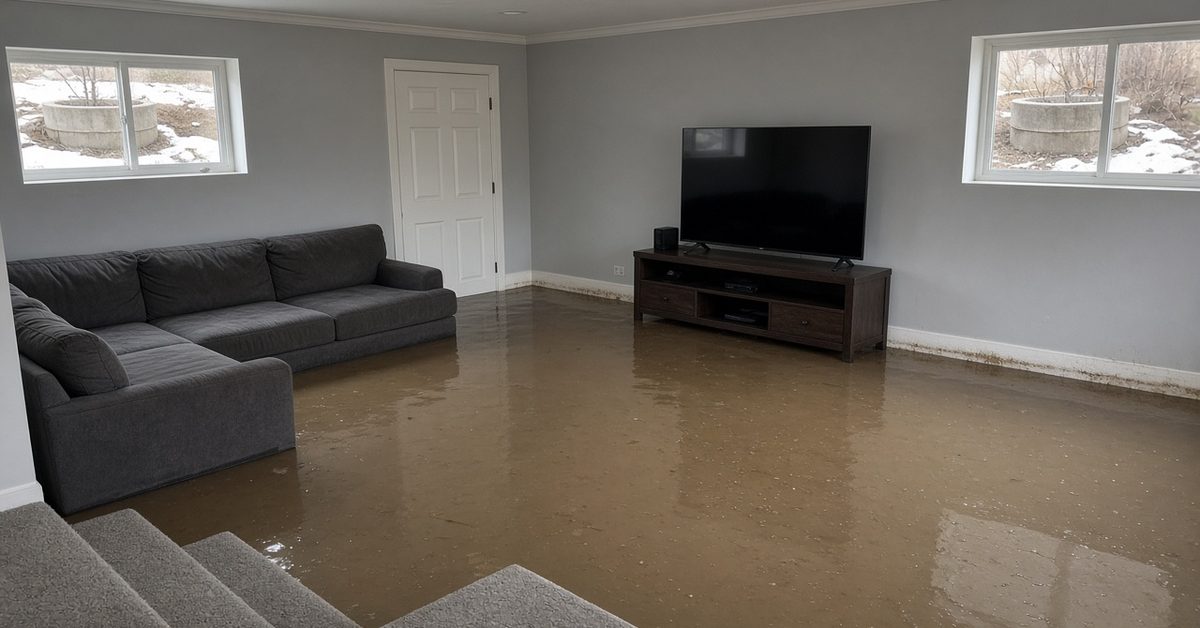
Spring in Northern Colorado can bring just about anything. A late snowstorm dumps a foot…
Frozen and Burst Pipes in Colorado Springs and Pueblo Homes
Colorado winters are famous for their swings. One afternoon it’s sunny and 50 degrees, and by the next morning an arctic front has pushed temperatures below zero. Homes in Colorado Springs and Pueblo handle a lot of that just fine, but those sudden drops are exactly when pipes freeze. And when they thaw, the calls start.
Frozen and burst pipes are one of the most common winter water losses we see along the Front Range. Here’s where they happen, what to do if one bursts, and how the damage gets cleaned up the right way.
Why Front Range Pipes Freeze
A lot of Colorado homes were built with plumbing in places that get cold fast when the temperature drops sharply:
- Supply lines in exterior walls, especially on north-facing sides
- Pipes running through crawl spaces and unheated garages
- Kitchen and bathroom sinks on outside walls
- Lines near foundation vents or gaps in the rim joist
- Hose bibs and irrigation lines that weren’t drained in the fall
- Basement plumbing near window wells or poorly insulated walls
The speed of the cold is part of the problem. When a front moves in overnight, homeowners don’t always have time to open cabinet doors, drip faucets, or check on the crawl space before temperatures plunge.
Why the Damage Shows Up Later
When water freezes, it expands and builds pressure inside the pipe. The pipe splits, but the ice keeps water from coming out. Then the sun comes back, the house warms up, and the ice melts. Water pours out of the split at full household pressure.
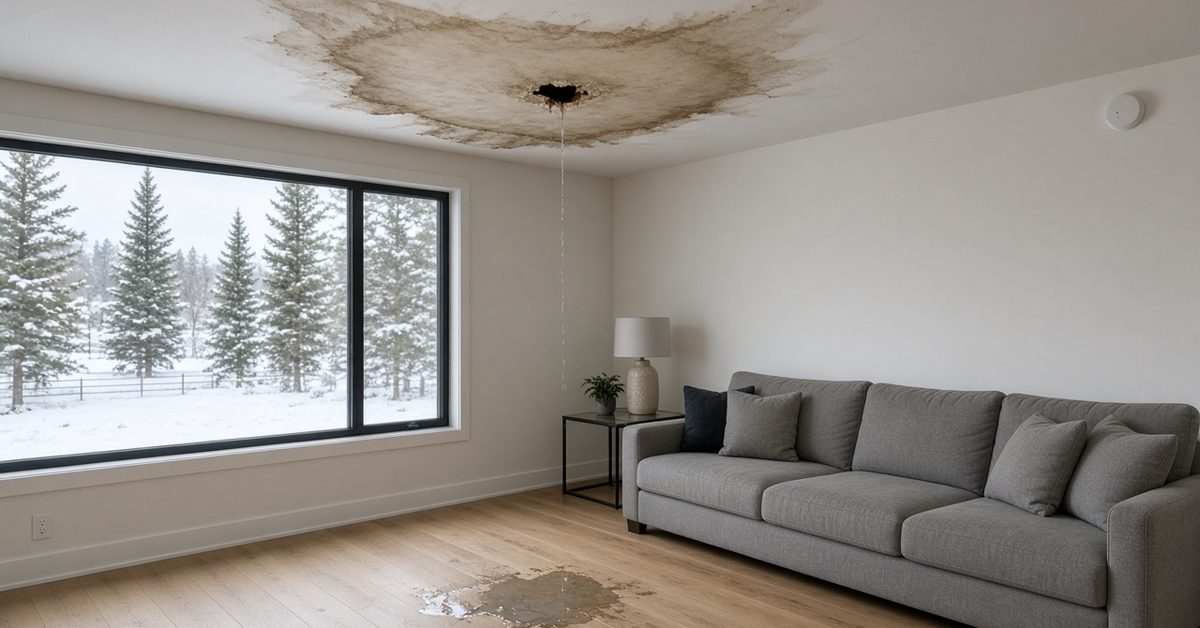
That’s why so many burst pipes are discovered on the first warm day after a cold snap, often while people are at work. A single split line can release a lot of water in an hour, soaking walls, ceilings, and floors before anyone knows it’s happening.
What to Do If a Pipe Bursts
- Shut off the main water valve. In most Colorado homes it’s in the basement or crawl space where the line enters the house.
- Cut power to wet areas. If water is near outlets, light fixtures, or appliances, turn off those breakers.
- Open faucets to drain the remaining water out of the lines.
- Move belongings out of the path of the water.
- Take photos and video of the damage before cleanup starts.
- Call a plumber and a restoration company. The plumber fixes the pipe. The restoration team deals with the water.
What Burst Pipe Cleanup Involves
A burst pipe loss is rarely just a wet floor. Water from a line in an exterior wall soaks insulation, the bottom of the drywall, and the framing, then spreads under flooring. A burst in a ceiling or upstairs bathroom sends water through the floor below and into ceilings and walls on the lower level.
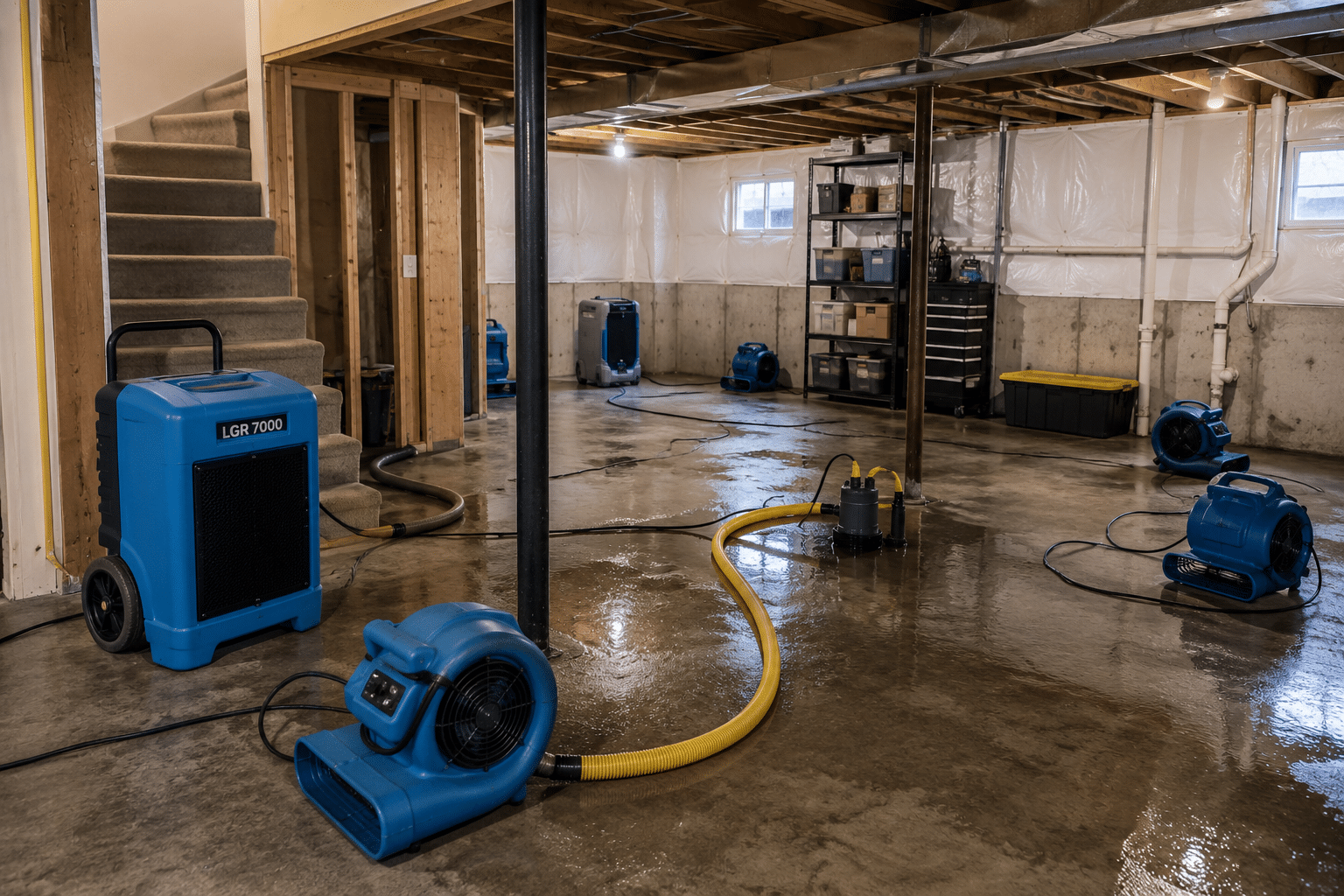
Professional burst pipe cleanup starts with extracting standing water and mapping moisture with meters and thermal imaging. Wet insulation comes out. Drywall is cut where water is trapped inside wall cavities. Then structural drying equipment, meaning commercial air movers and dehumidifiers, runs until the framing, subfloor, and walls test dry. Daily readings confirm progress so nothing gets closed up while it’s still wet.
Preventing Frozen Pipes
- Drain and shut off outdoor spigots and irrigation lines before the first hard freeze.
- Insulate pipes in crawl spaces, garages, and exterior walls.
- Seal gaps around foundation vents, rim joists, and pipe penetrations.
- Open cabinet doors under sinks on exterior walls during cold snaps.
- Let faucets on vulnerable walls drip on the coldest nights.
- Keep the thermostat steady, even when you travel.
- Know where your main shutoff is before you need it.
Insurance and Burst Pipes
Sudden water damage from a burst pipe is commonly covered under homeowners policies, subject to your deductible. Coverage can depend on whether reasonable steps were taken to keep the home heated, especially if it was vacant. Report the damage quickly and keep photos and receipts. We work directly with insurance companies and help document everything they need.
Frequently Asked Questions
How cold does it have to get for pipes to freeze in Colorado?
There’s no exact number, but the risk climbs quickly when temperatures stay below about 20 degrees for several hours, and it rises sharply when it drops below zero. Pipes in exterior walls, crawl spaces, and garages freeze first, especially when a cold front arrives fast.
How do I thaw a frozen pipe safely?
Open the faucet and warm the pipe gently with a hair dryer, heating pad, or space heater kept a safe distance away. Start near the faucet and work back toward the frozen section. Never use an open flame. If you can’t find or reach the frozen spot, call a plumber.
How long does drying take after a burst pipe?
Most burst pipe losses take three to five days of drying once equipment is running. Larger losses, or water that spread across two floors, can take longer. We only start repairs once moisture readings confirm the structure is dry.
Can I stay in my home during drying?
Usually, yes. The equipment makes some noise and warmth, and some rooms may be closed off for a few days, but many families stay home. If the kitchen or bathrooms are badly affected, we’ll talk through options with you and your insurance adjuster.
Local Help in Colorado Springs and Pueblo
With offices in both cities, we respond to burst pipes across Colorado Springs and Pueblo around the clock. If a pipe burst in your home, call Property Craft at (719) 782-8629. We’re available 24/7.
Related Posts