Colorado winters are famous for their swings. One afternoon it’s sunny and 50 degrees, and…
Flooded Basements in Northern Colorado After Spring Storms and Snowmelt
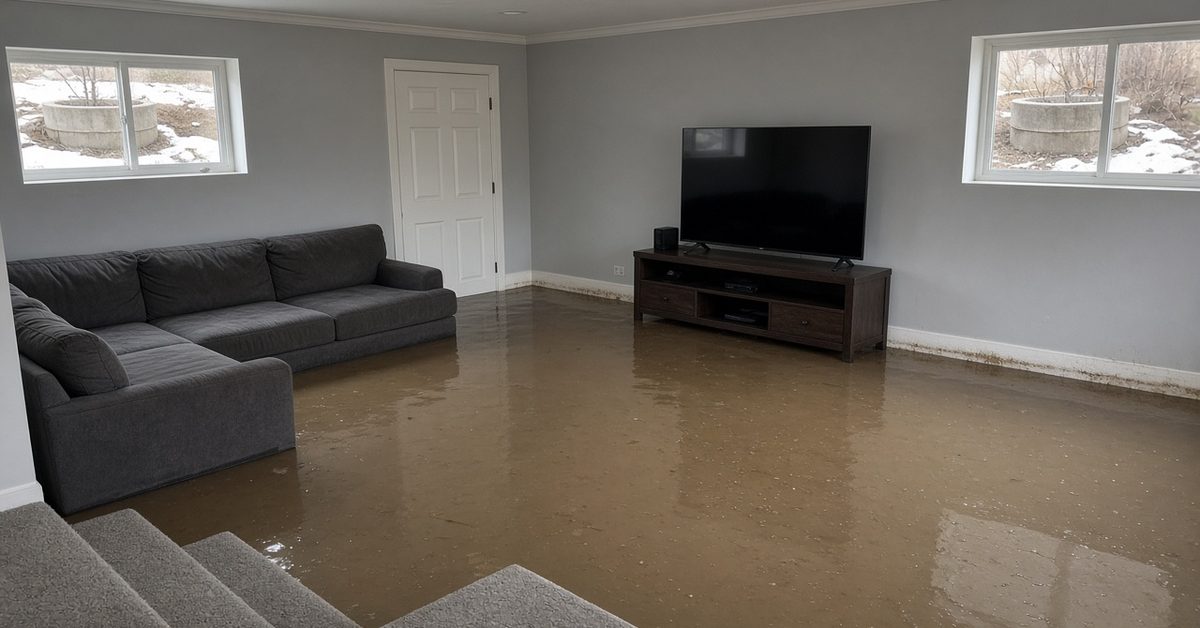
Spring in Northern Colorado can bring just about anything. A late snowstorm dumps a foot of heavy, wet snow, and three days later it’s melting fast under warm sun. Or a spring thunderstorm drops more rain in an hour than the ground can take. For homeowners in Loveland, Fort Collins, and Greeley, those are the days basements take on water.
Here’s how water gets into Northern Colorado basements, what to do right away, and what a proper cleanup looks like.
How Water Gets Into the Basement
- Fast snowmelt. Heavy spring snow melts quickly, and if the ground below is still frozen or saturated, water collects against the foundation.
- Heavy rain. Short, intense storms overwhelm gutters, downspouts, and yard drainage.
- Window wells. When window well drains clog with leaves or soil, water fills the well and leaks around the basement window.
- Foundation cracks. Expansive clay soils common in parts of the Front Range shift as they get wet and dry, which can open cracks in basement walls and floors.
- Sump pump failures. A pump that loses power, sticks, or can’t keep up lets water rise.
- Soil that has settled toward the house, common in newer neighborhoods, sends water right to the foundation.
What to Do First
- Stay safe. Shut off power to the basement if water is near outlets, cords, or the furnace.
- Check the sump pump if you have one and it’s safe to reach. Make sure it has power and the float isn’t stuck.
- Move belongings off the floor and away from the water.
- Photograph everything before cleanup starts.
- Call for help. The sooner water is out, the more of the basement can be saved.
What Cleanup Involves
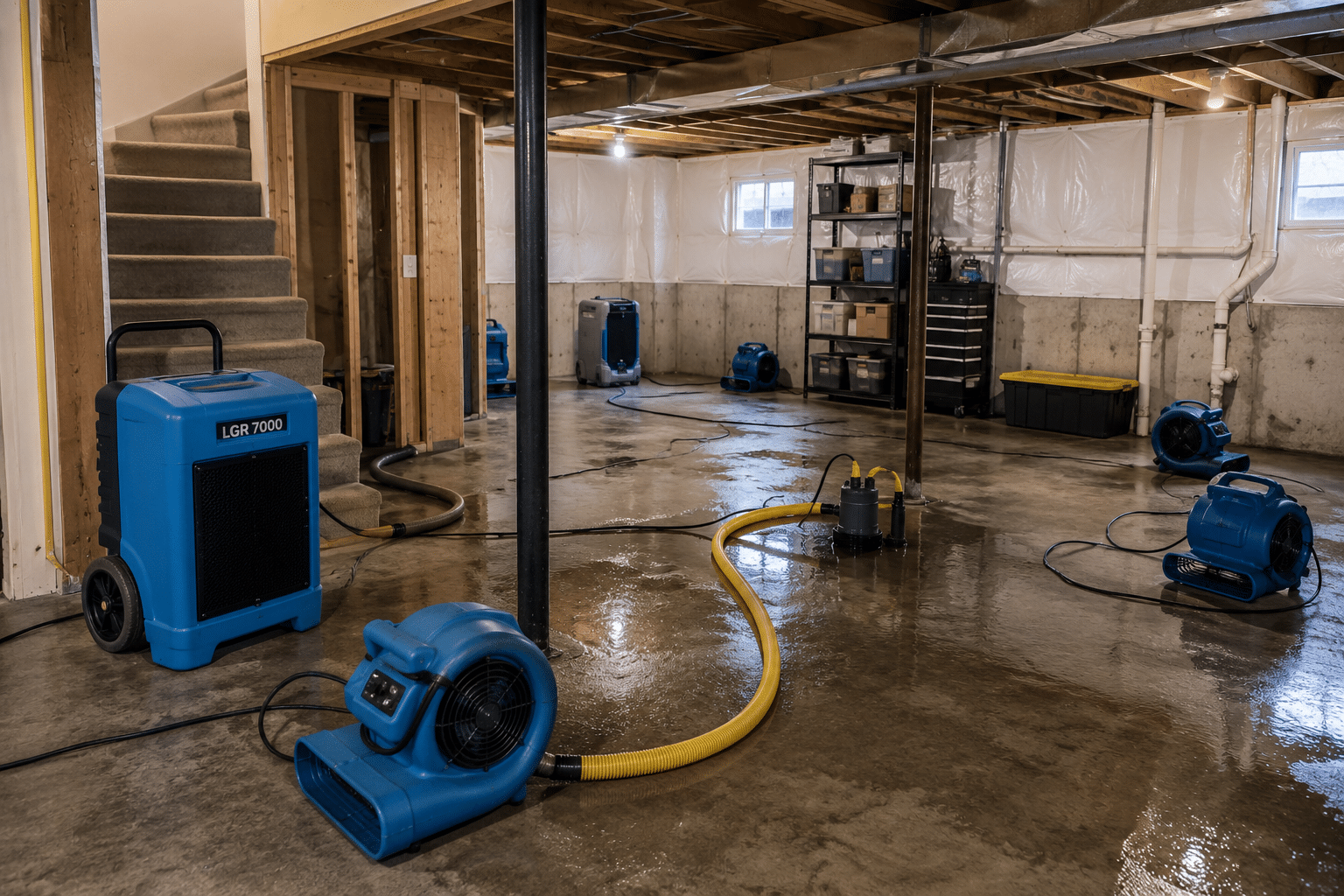
Getting the water out fast is the first priority. Professional water removal uses truck-mounted and portable extraction equipment to pull standing water off floors and out of carpet. From there, the team maps moisture in every wall and floor with meters and thermal imaging.
In a finished basement, wet carpet pad usually has to come out, and drywall is often cut above the wet line so insulation and framing can dry. If water came in from outside, it’s treated as contaminated, which means more porous materials are removed and surfaces are cleaned before drying. Our flooded basement and crawl space team then sets up drying equipment and checks readings daily until the concrete and framing are back to normal.
Why Basements Need Extra Attention
Colorado’s air is dry outdoors, but basements are a different story. Concrete walls and floors hold water, the space stays cool, and air doesn’t move much. A basement that looks dry after a day or two can still have wet drywall, framing, and carpet pad, which leads to swelling, staining, and lasting odor if it isn’t dried properly.
Keeping Water Out Next Time
- Extend downspouts several feet away from the foundation.
- Regrade soil so it slopes away from the house.
- Clean window well drains and add covers.
- Add a battery backup to your sump pump, or install one if you don’t have a pump.
- Seal foundation cracks and have larger cracks evaluated.
- Move snow away from the foundation after heavy storms.
Insurance Notes
Coverage for basement water depends on how it got in. Water from a failed sump pump or sewer backup usually requires a water backup endorsement. Surface water from outside is typically considered flood, which needs a separate policy. It’s worth reviewing your coverage with your agent before spring.
Frequently Asked Questions
How long does it take to dry a flooded basement?
Most basements take three to five days of drying once water is removed and equipment is running. Concrete holds moisture, so basements often take a little longer than upstairs rooms. We only start repairs once moisture readings confirm everything is dry.
Can I save the carpet in my basement?
Sometimes. If the water was clean and removed quickly, carpet can often be dried and reinstalled over new pad. If the water came from outside, from a floor drain, or sat for days, the carpet usually needs to be replaced.
Why does my basement flood only in spring?
Spring brings fast snowmelt, heavy rain, and saturated soil all at once. That combination puts pressure on foundation walls and overwhelms drainage around the house. In drier months, the same basement may stay completely dry.
Do expansive soils cause basement leaks?
They can contribute. Clay soils that swell when wet and shrink when dry can put stress on foundation walls over time, opening cracks that let water in. Good drainage around the house helps keep soil moisture more stable.
Is a battery backup sump pump worth it?
For most finished basements, yes. Storms that bring heavy rain can also knock out power. A battery backup keeps water moving when the main pump can’t, and many models include an alarm that alerts you if the primary pump fails.
Serving Northern Colorado
With local offices in Loveland and Greeley, we respond fast to flooded basements across Loveland and Fort Collins and Greeley. If your basement is taking on water, call Property Craft at (719) 782-8629. We’re here 24/7.
Related Posts