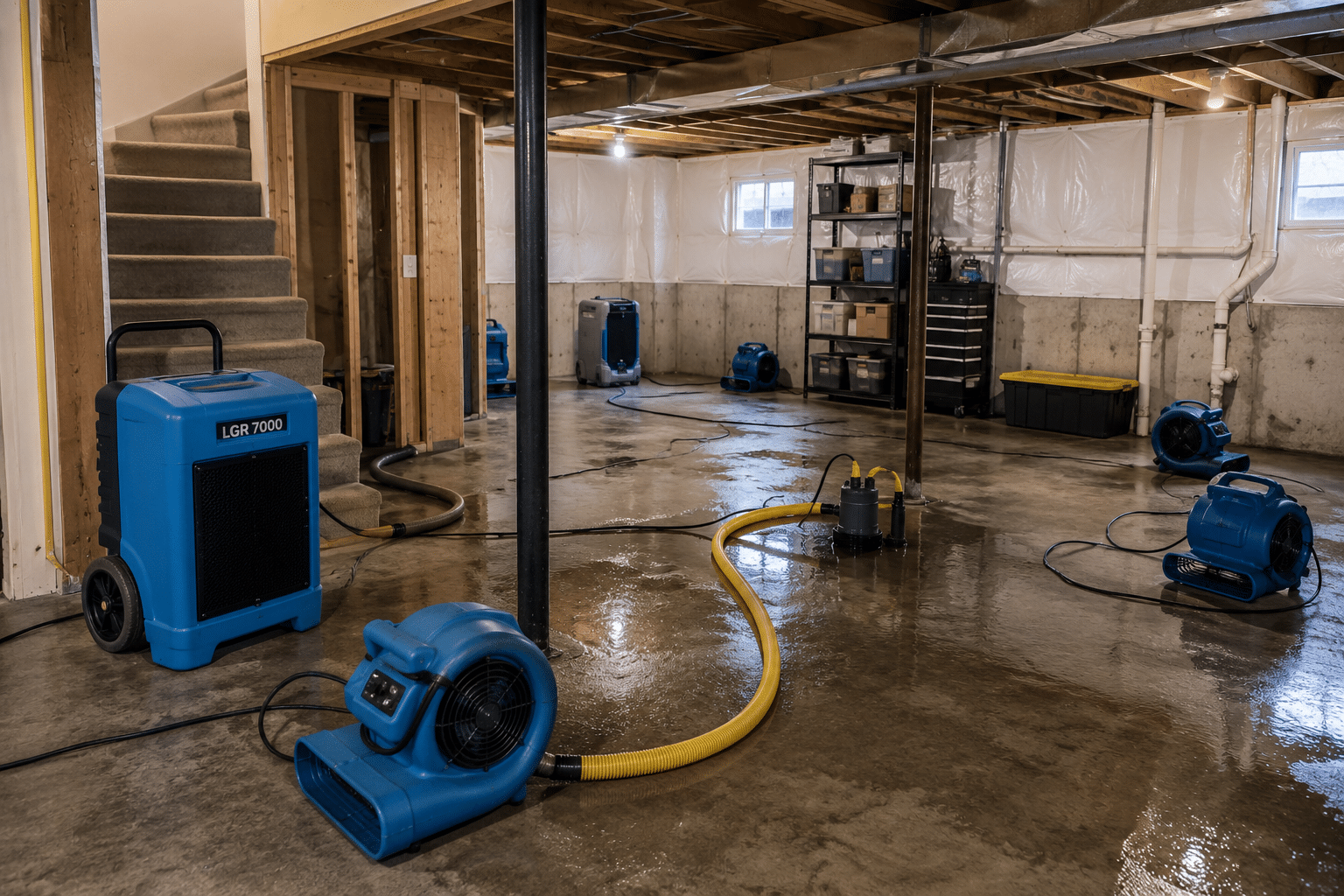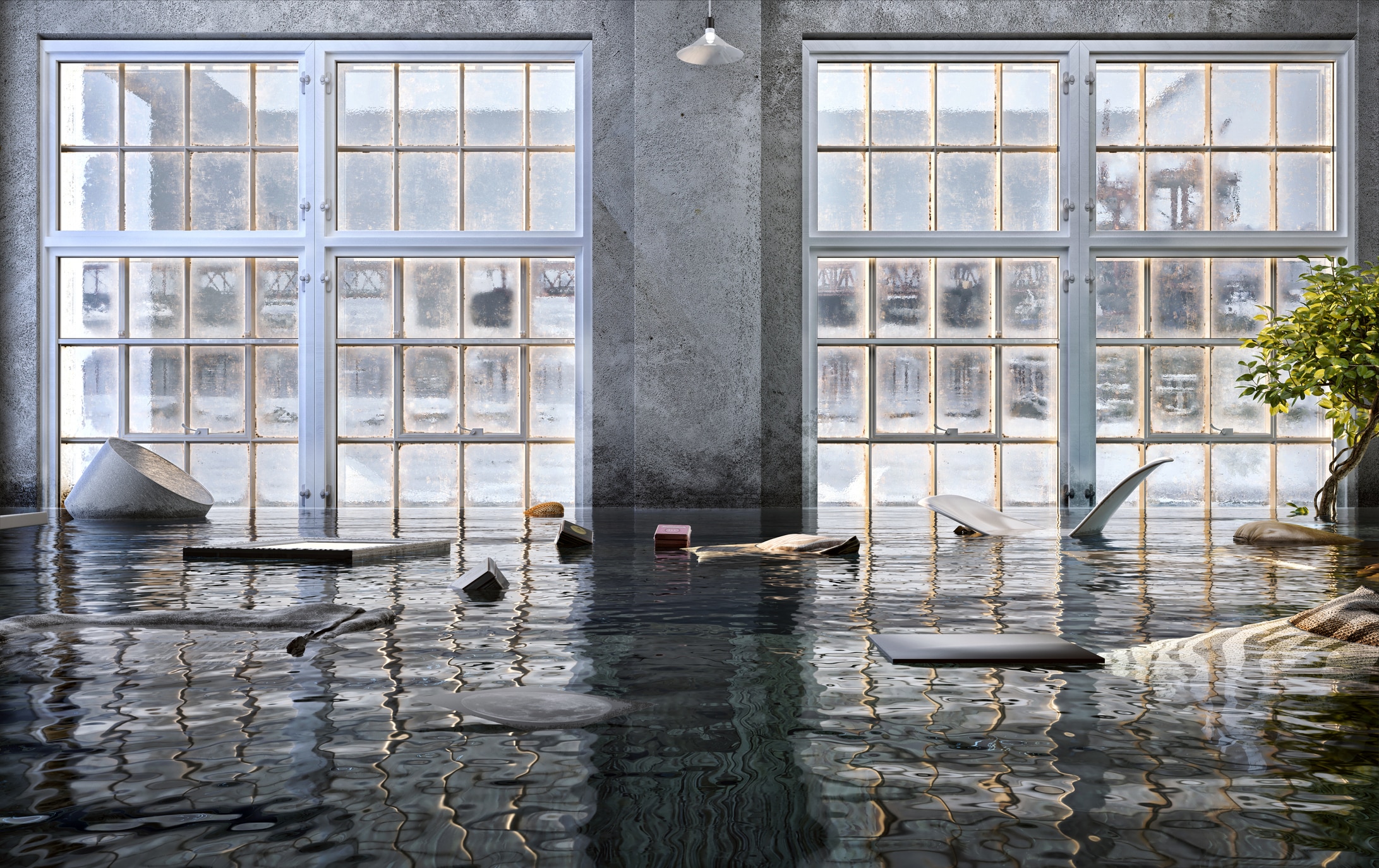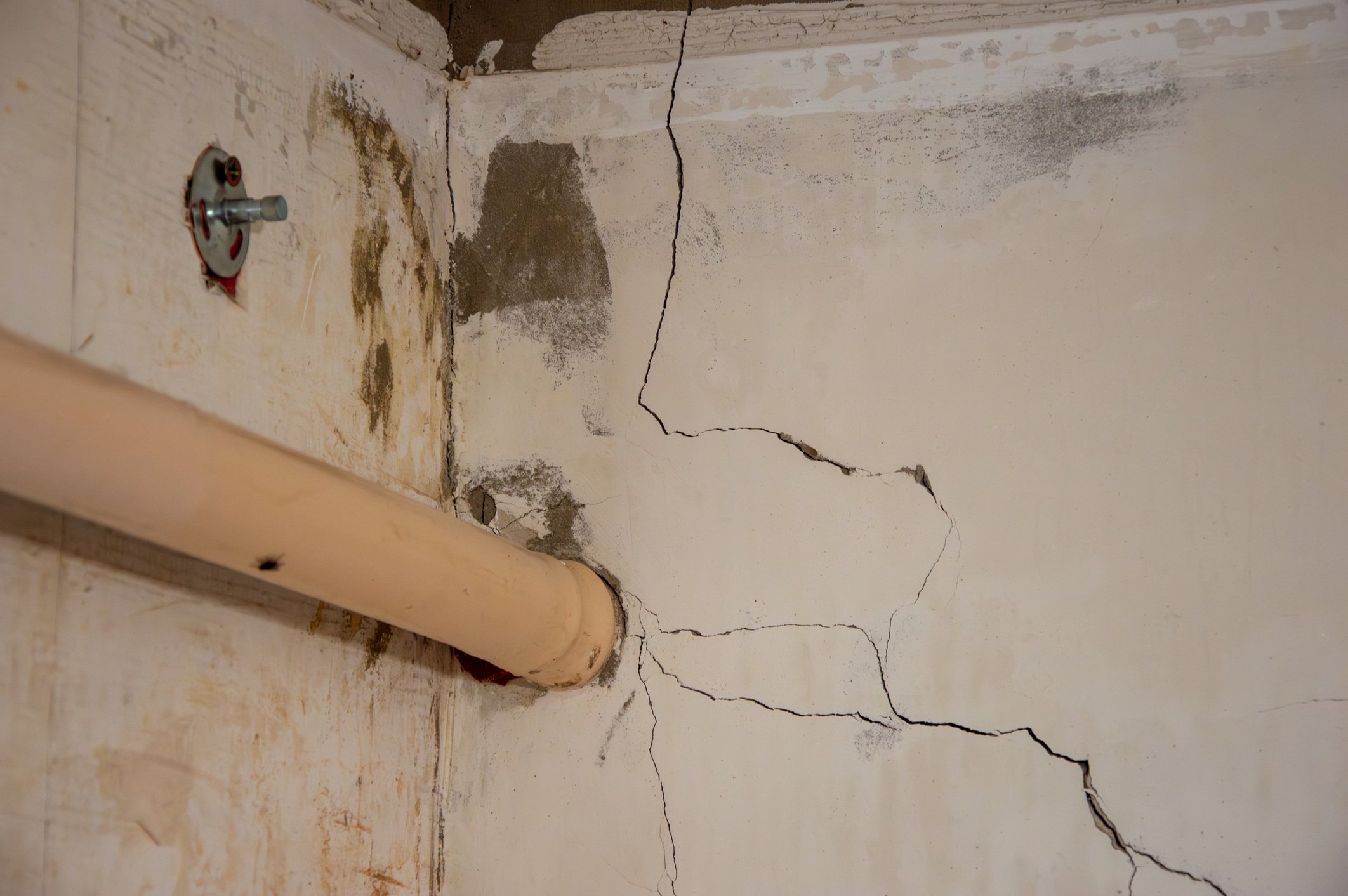
Drying out a flooded basement properly requires industrial water extraction, air movers positioned at specific…
Why Water Damage Drying Works Differently at Colorado Altitudes
Colorado’s elevation creates physics for water damage drying that does not apply at sea level. The lower atmospheric pressure at altitude changes the way water evaporates from wet building materials, the way dehumidifiers function, and the psychrometric calculations that restoration professionals use to determine drying equipment placement and monitor progress. A restoration company that applies standard lower-elevation drying protocols to a water loss at 6,000 feet in Colorado Springs or 4,700 feet in Pueblo is using the wrong playbook for the conditions present.
How Altitude Affects Evaporation
At higher altitudes, atmospheric pressure is lower than at sea level. This lower pressure reduces the boiling point of water and, more relevant to restoration drying, reduces the partial pressure of water vapor that the air must overcome to evaporate water from a wet surface. The practical effect is that water evaporates faster at altitude than at sea level under the same temperature conditions.
This sounds like an advantage, and in terms of raw drying speed, it can be. But the faster evaporation rate also means that water migrates more quickly through building materials before it can be captured by drying equipment that was not designed or calibrated for the altitude. Water that would have stayed in the surface layers of a carpet or drywall at sea level moves into the structural framing faster at altitude, potentially reaching materials that are more difficult to dry before the drying equipment can address the surface moisture.
How Altitude Affects Dehumidifier Performance
Conventional dehumidifiers are rated at sea level conditions. At altitude, the same dehumidifier removes less moisture per unit of time because the lower air density reduces the mass of air processed per cubic foot of mechanical capacity. A dehumidifier rated at 70 pints per day at sea level may perform at 50 to 55 pints per day at Colorado Springs elevation. Property Craft’s structural drying approach accounts for this performance reduction by deploying additional equipment capacity and recalculating the psychrometric targets appropriate for the altitude of the specific job site.
Standard drying protocols from restoration training programs are calibrated for sea-level conditions. The humidity target levels, equipment placement guidance, and daily moisture reduction expectations all assume sea-level atmospheric pressure. Applying these targets directly at Colorado altitudes produces incorrect assessments of drying progress and may lead to premature equipment removal before the structure has actually reached dry standard.
Monitoring Drying at Colorado Altitudes
Daily moisture readings with calibrated equipment remain the standard for monitoring drying progress regardless of altitude. The targets change at altitude because the equilibrium moisture content of building materials is different at lower humidity levels than the standards assume. Property Craft calibrates moisture content targets for the specific altitude of each job site rather than applying a single national standard across all elevation ranges.
The documentation of drying progress matters for the insurance claim whether the property is in Colorado Springs, Pueblo, Greeley, or Longmont. Daily moisture readings, equipment logs, and clearance confirmation give the adjuster the evidence that drying was complete before reconstruction began. This documentation protects the property owner if future mold claims arise from the same loss.
Burst Pipes at Colorado Altitude During Winter
Colorado’s freeze-thaw cycles at elevation create pipe freeze risk even in occupied homes during cold snaps that drive overnight temperatures well below zero. Burst pipe cleanup at Colorado altitudes involves the same elevated evaporation dynamics that affect all water damage drying in the state, with the additional complication that winter events often coincide with low ambient indoor humidity levels from home heating that are already near or below the levels that indicate dry standard. Correctly interpreting moisture readings in a Colorado home during winter requires accounting for the ambient conditions rather than applying standard targets without adjustment.
Basement and Crawl Space Drying in Colorado
Below-grade spaces in Colorado properties including basements in Colorado Springs and crawl spaces in Front Range homes dry through a different mechanism than above-grade spaces at altitude. Soil moisture pressure from Colorado’s clay-heavy soils along the Front Range creates a continuous moisture source for below-grade spaces that is not eliminated by drying equipment working on the building materials. Property Craft’s flooded basement and crawl space services assess the soil moisture contribution to the drying challenge and address vapor control as part of the restoration scope, not just the wet building materials.
Frequently Asked Questions
Q: Does altitude really affect water damage restoration in Colorado?
A: Yes, measurably. The lower atmospheric pressure at Colorado elevations affects evaporation rates, dehumidifier performance, and the psychrometric calculations used to determine drying equipment requirements and targets. A dehumidifier rated at sea level conditions removes 15 to 20 percent less moisture per unit of time at Colorado Springs elevation. Standard sea-level drying protocols applied at altitude produce incorrect equipment sizing and inaccurate progress assessments.
Q: How long does water damage drying take in Colorado?
A: The standard three to five day drying timeline applies as a baseline in Colorado as it does elsewhere. At altitude, the faster evaporation rate from building material surfaces can accelerate the visible moisture reduction, but this must be balanced against the reduced dehumidifier capacity that recaptures that moisture from the air. The timeline is determined by daily moisture readings that confirm progress, not by a fixed day count. Clearance is confirmed when all materials reach dry standard, regardless of elapsed days.
Q: How do I know if my Colorado home was dried completely after water damage?
A: Complete drying is confirmed by calibrated moisture meter readings across all affected materials that show values at or below the dry standard for each material type, adjusted for the altitude and the ambient conditions at the time of measurement. A restoration company that provides you with the daily moisture reading log from start to finish gives you the documented evidence of the drying progress. Companies that cannot produce daily readings cannot confirm the drying was complete.
Q: Why do pipes freeze in Colorado during cold snaps even in occupied homes?
A: Colorado’s mountain and Front Range communities experience cold snap events where overnight temperatures drop far below zero Fahrenheit. Pipes in exterior walls, in unheated garage spaces, and in crawl spaces below uninsulated floors can freeze during these events even in heated homes if the pipe is routed through a space that the home’s heating system does not adequately warm. During cold snap events, maintaining interior temperature above 65 degrees and leaving cabinet doors open on exterior walls reduces freeze risk.
Water damage to your Colorado home or business? Property Craft provides water damage restoration calibrated for Colorado altitudes across Colorado Springs, Pueblo, Pueblo West, Loveland, Greeley, and Longmont. Call now.
Related Posts