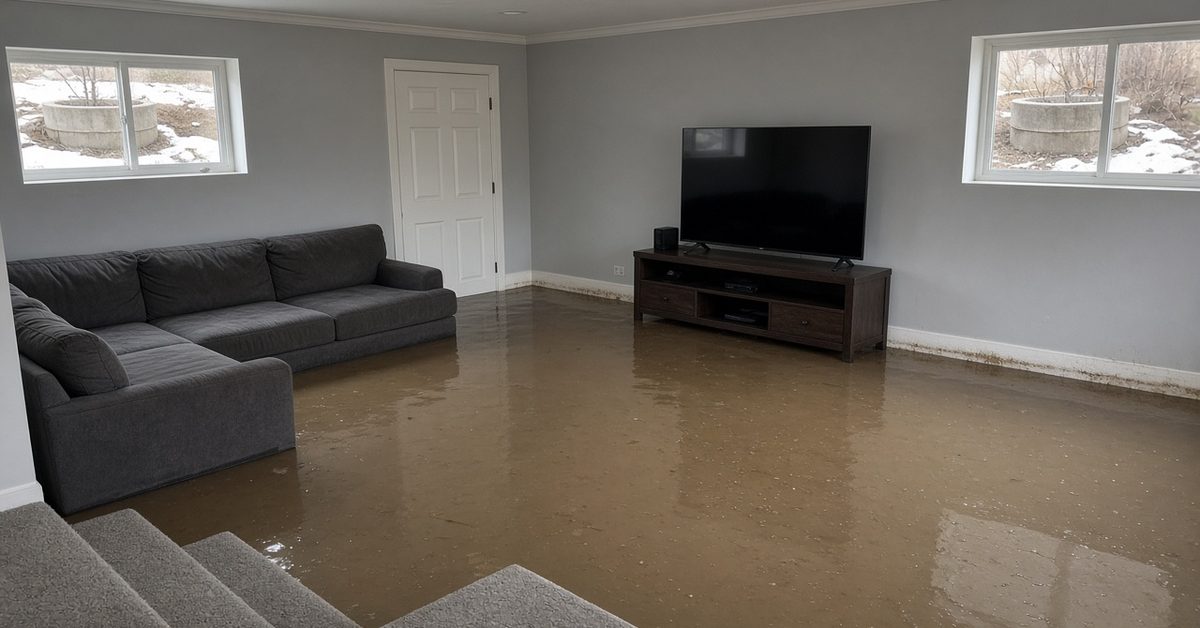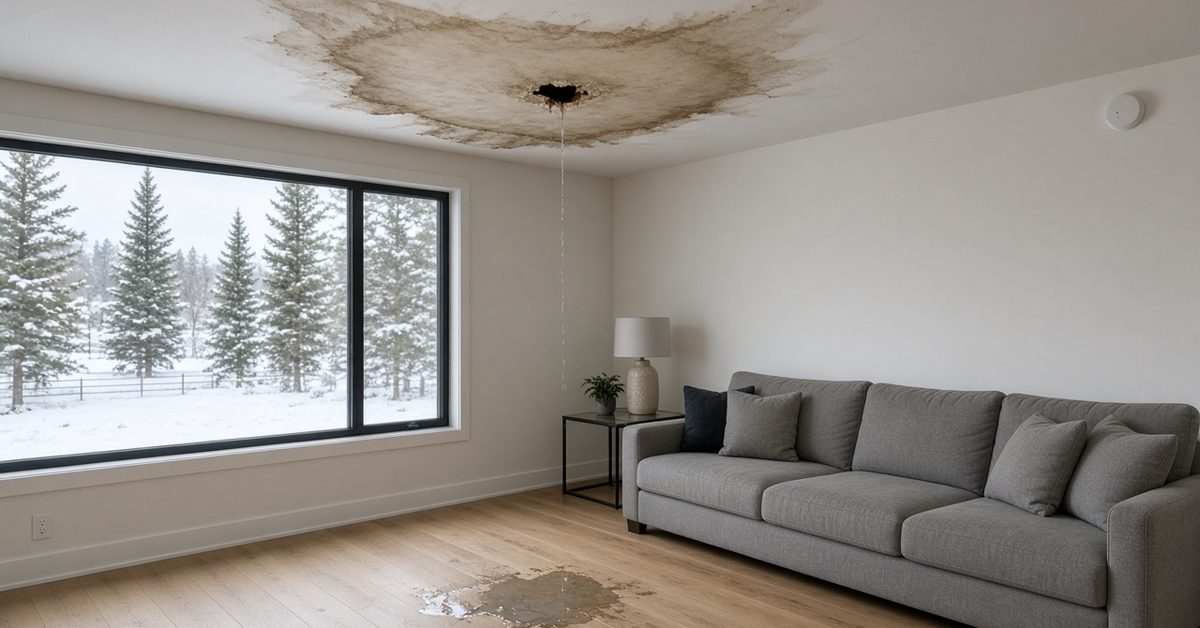
Spring in Northern Colorado can bring just about anything. A late snowstorm dumps a foot…
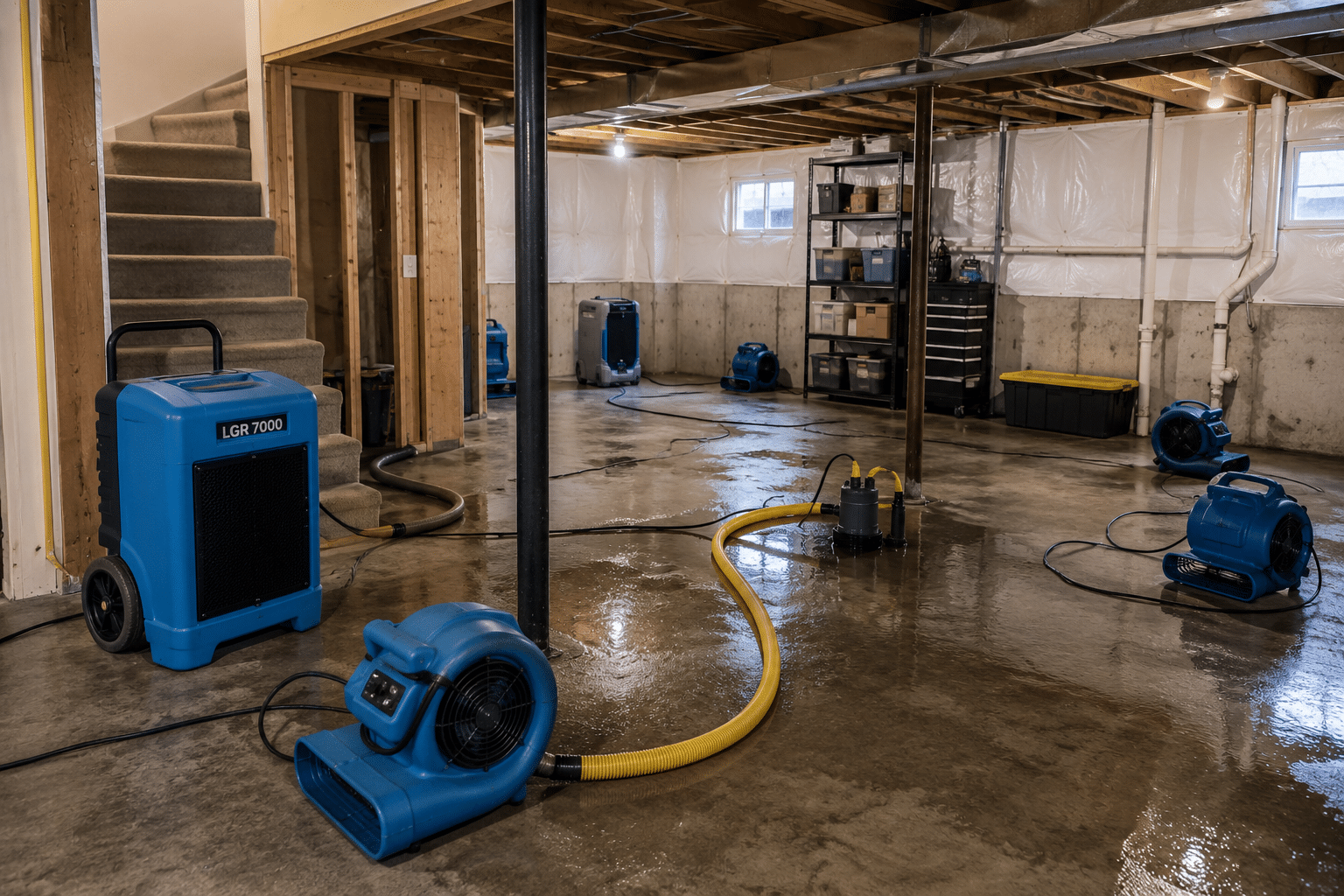
How Do You Dry Out a Flooded Basement?
Drying out a flooded basement properly requires industrial water extraction, air movers positioned at specific angles to maximize evaporation, calibrated dehumidifiers running continuously, and daily moisture readings to confirm the structure is actually drying and not just feeling dry at the surface. It takes three to five days minimum with professional equipment.
A wet vac and a box fan will remove visible water and move air around the room. They will not dry the wall cavities, the subfloor, the insulation, or the concrete itself to the moisture content level required to prevent mold. Here is what actually needs to happen and why.
Step One: Remove the Standing Water First
Before any drying equipment goes in, standing water comes out. Submersible pumps handle significant water volume quickly. Truck-mounted extraction units pull water from carpet, padding, and flooring materials that submersible pumps cannot reach. This step takes hours, not days, but it sets up everything that follows.
Do not skip to fans and dehumidifiers while standing water is still present. Equipment running in a flooded space is both a safety hazard and ineffective. The water needs to be removed first, then the drying phase begins.
Homeowners in Loveland dealing with basement flooding from snowmelt or a failed sump pump need fast extraction before the water has time to wick further into the wall assembly. A flood cleanup and restoration team in Loveland arrives with extraction equipment ready to deploy, not just drying equipment that requires the water to already be gone.
Why Box Fans Do Not Dry a Basement
A box fan moves air across a surface. Industrial air movers used in professional restoration are designed to create a specific airflow pattern that maximizes evaporation from the surface of wet materials. They run at significantly higher velocity than household fans and are positioned based on the geometry of the space to achieve even drying across all affected surfaces.
More importantly, fans move moisture into the air but do nothing to remove it from the space. Without dehumidification running simultaneously, a fan increases humidity in the basement rather than reducing it. High humidity air cannot hold additional moisture evaporating from the wet materials. Drying stops. The basement stays wet.
What a Dehumidifier Actually Does in This Situation
A refrigerant or desiccant dehumidifier pulls moisture from the air continuously, condensing it and draining it away. This keeps the relative humidity in the space low enough that wet materials can continue to release moisture into the air. The dehumidifier and the air movers work together: air movers pull moisture off surfaces and into the air, dehumidifiers remove it from the air.
Household dehumidifiers are designed for maintaining comfortable indoor humidity, not for drying a flooded space. They are undersized for the moisture load a flood produces and will run continuously without making meaningful progress in the critical first days.
Homeowners in Boulder and Longmont who attempt to dry a flooded basement with household equipment often discover the problem when a musty odor develops two to three weeks later. By then, mold has established in the wall assembly. Professional basement flooding restoration in Boulder and Longmont with industrial equipment changes the outcome because the drying is fast enough to stay ahead of the mold growth window.
How Long Does It Take to Dry a Flooded Basement?
With professional equipment, structural drying in a flooded basement typically takes three to five days. Dense materials like concrete, thick hardwood, and masonry take longer than drywall and carpet. A basement that had significant water standing for more than twenty-four hours before extraction began takes longer than one where the response was immediate.
The end of the drying phase is not determined by how the space feels or smells. It is determined by moisture meter readings confirming that all affected materials have reached acceptable moisture content levels. A certified restoration team documents these readings daily and provides a final moisture inspection report before the drying phase is officially closed.
What Happens If a Basement Is Not Dried Properly?
Mold begins growing on wet building materials within twenty-four to forty-eight hours. A basement that appears dry on the surface but has residual moisture in the wall cavities, subfloor, or insulation provides exactly the conditions mold needs to establish and grow. The problem appears weeks later when the odor becomes noticeable or when visible growth emerges on a surface.
At that point, what was a water damage job has become a mold remediation job in addition to the water damage repairs. The cost is substantially higher and the disruption is significantly greater.
Homeowners in Pueblo and Colorado Springs who experienced basement flooding and did not get professional drying should have a moisture assessment done even if the basement appears and smells fine. IICRC certified water damage restoration in Colorado Springs uses thermal imaging to find moisture that has no surface presence, catching hidden problems before they become mold problems.
Can You Dry a Flooded Basement Yourself?
You can remove visible water yourself and begin the process. But completing the drying to a standard that prevents mold requires equipment and monitoring that most homeowners do not have access to. The investment in professional drying is substantially less than the cost of mold remediation and reconstruction that follows an improperly dried space.
If your policy covers the water damage, professional drying is also covered. There is no financial reason to attempt a DIY solution that is likely to result in a more expensive problem.
Frequently Asked Questions
Q: How do you dry out a flooded basement?
A: Properly drying a flooded basement requires industrial water extraction to remove standing water, air movers to maximize evaporation from wet surfaces, dehumidifiers to remove moisture from the air continuously, and daily moisture meter readings to confirm actual drying progress inside wall assemblies and structural materials. The process takes three to five days minimum with professional equipment.
Q: How long does it take to dry a flooded basement?
A: Three to five days with professional industrial drying equipment running continuously. Dense materials like concrete and hardwood take longer. Basements with water that sat for more than twenty-four hours before extraction take longer than those addressed immediately. Drying is confirmed by moisture meter readings, not by how the space looks or feels.
Q: Can I dry out my basement myself after flooding?
A: You can remove visible water, but completing the drying to a standard that prevents mold requires industrial equipment and daily moisture monitoring that most homeowners do not have. Household fans and dehumidifiers are insufficient for the moisture load a flooded basement produces. Professional drying is covered by most homeowner policies when the water damage itself is covered.
Q: What happens if a basement is not dried properly after flooding?
A: Mold begins growing within twenty-four to forty-eight hours on wet building materials. A basement that appears dry but has residual moisture in wall cavities, insulation, or under flooring will develop mold growth that becomes apparent weeks later. At that point the scope expands from water damage to water damage plus mold remediation, significantly increasing the cost and disruption.
Flooded basement? Call Property Craft for certified water damage restoration across Loveland, Boulder, Longmont, Pueblo, and Colorado Springs. Same-day response, industrial drying, full insurance documentation.
Related Posts